The Night Nine Hikers Walked into the Snow
Few true stories are as haunting as the Dyatlov Pass incident, a mysterious tragedy that unfolded in the northern Ural Mountains of the Soviet Union in February 1959.
Nine experienced hikers disappeared from their tent during the night. Their shelter was later found cut open from the inside. Their boots, coats, and supplies remained behind, while the hikers—some of them only partially dressed—had fled into a freezing mountain wilderness.
By the time rescuers found the bodies, all nine members of the expedition were dead.
For decades, investigators, scientists, journalists, and amateur researchers have tried to explain why the group abandoned the safety of their tent in the middle of a deadly winter storm. Many theories have been proposed, but the incident remains surrounded by unanswered questions.

The Expedition Begins
The group was led by Igor Dyatlov, a 23-year-old engineering student and experienced skier. Most of the hikers were students or graduates of the Ural Polytechnic Institute in Sverdlovsk, now known as Yekaterinburg.
They were not reckless beginners. The group had experience traveling through difficult winter landscapes, carrying heavy equipment, navigating through snow, and surviving in isolated areas. Their planned expedition was demanding, but it was not considered impossible for people with their training.
The original group included ten hikers:
- Igor Dyatlov
- Zinaida Kolmogorova
- Rustem Slobodin
- Yuri Doroshenko
- Lyudmila Dubinina
- Alexander Kolevatov
- Semyon Zolotaryov
- Nikolai Thibeaux-Brignolle
- Yuri Krivonischenko
- Yuri Yudin
One of the hikers, Yuri Yudin, became ill during the early part of the journey and decided to turn back. His decision saved his life. He was the only member of the original expedition who survived.
At the time, Yudin did not know that he had just separated from a group that would soon become the center of one of the most disturbing mysteries in modern history.
A Difficult Journey Through the Urals
The hikers were traveling toward Mount Otorten, a remote and rugged area covered in snow. The landscape was beautiful but unforgiving. Temperatures could drop dramatically, visibility could disappear within minutes, and strong winds could erase tracks almost immediately.
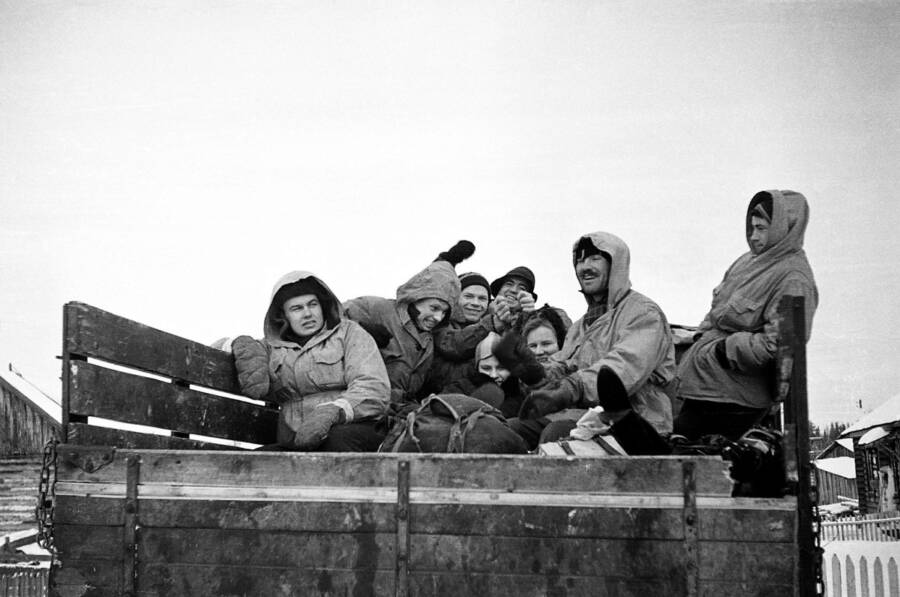
The group kept diaries and photographs during the journey. Their cameras captured ordinary moments: meals, equipment, laughter, and the difficult work of moving through deep snow. These images are among the last known records of their lives.
The photographs are unsettling precisely because they seem so normal. The hikers do not look like people who believe they are about to die. They appear tired but focused, continuing their expedition as planned.
No one in those images could have known that the photographs would later become evidence in a case that fascinated the world.
The Final Night
On the evening of February 1, 1959, the group established a camp on the slope of a mountain known today as Dyatlov Pass.
Their tent was placed in an exposed location rather than in a sheltered forested area. The decision may have been made because the hikers wanted to avoid losing elevation or because they were too tired to continue. Whatever the reason, the campsite left them vulnerable to the severe weather.
Inside the tent, the hikers arranged their sleeping bags, clothing, food, and equipment. Their boots were left behind. Several warm coats also remained inside.
At some point during the night, something caused the group to leave.
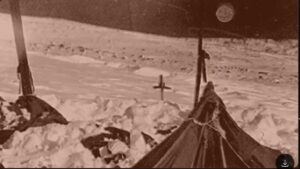
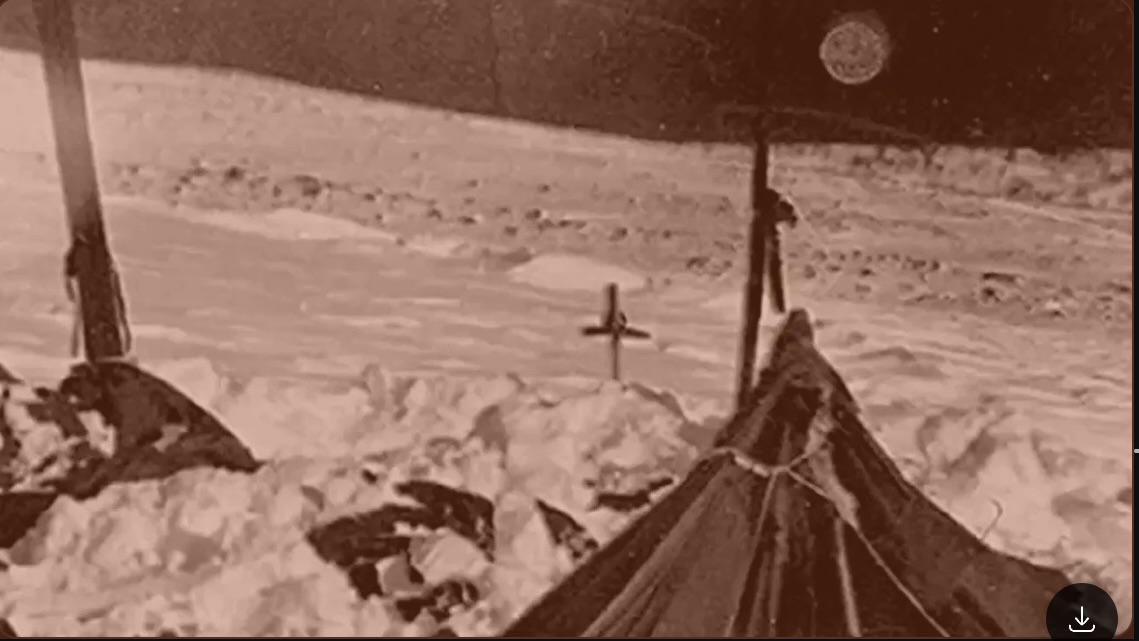
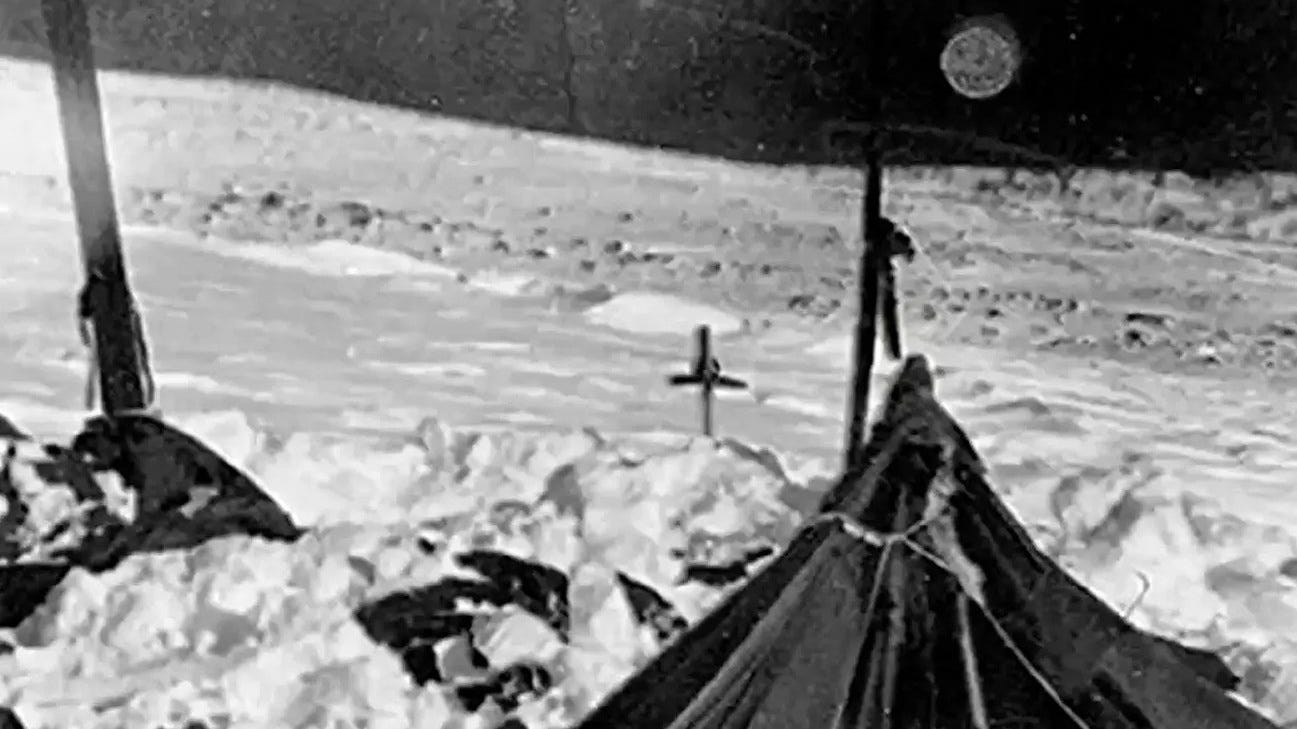
The tent was later found cut open from the inside. This detail became one of the most disturbing elements of the case. It suggested that the hikers had been unwilling—or unable—to use the normal entrance.
They apparently moved into the snow without properly dressing themselves. Some were barefoot or wearing only light clothing. In an environment where exposure could kill within a short time, leaving the tent in such a condition seemed almost impossible to understand.
 *
*
The Search for the Missing Hikers
When the group failed to return as scheduled, relatives and officials began to worry. A search party was eventually organized, although the remoteness of the region and the harsh winter conditions made the operation difficult.
On February 26, rescuers discovered the abandoned tent. It was still standing, but the scene inside was deeply unsettling.
The hikers’ belongings were present. Their shoes and much of their clothing remained behind. Food and equipment were still in the camp. There was no obvious sign that the group had packed deliberately for an emergency evacuation.
Outside the tent, investigators found tracks leading downhill toward the edge of a nearby forest.
The tracks suggested that the hikers had left together or in small groups. They did not appear to have been dragged away. There was no clear evidence of a large group of attackers, although the condition of the snow made the investigation difficult.
The first two bodies were found beneath a large cedar tree in the forest. They had attempted to build a fire, but the cold had overwhelmed them.
Several more bodies were discovered between the cedar tree and the tent, as though the hikers had tried to return to the camp but collapsed along the way.
The final four bodies were found months later, buried under snow in a ravine.
Injuries That Confused Investigators
The hikers had died from hypothermia, but some bodies also had serious injuries.
Several had fractured bones, including severe injuries to the chest or skull. The damage was unusual because there were few visible external wounds. This led to speculation that the group had been attacked by unknown people, wild animals, or even something supernatural.
Some bodies were missing soft tissue, including the eyes or tongue. However, these injuries may have occurred after death as a result of decomposition, water movement, or scavenging animals. Such details were later repeated in sensational accounts, often without the necessary scientific context.
The tragedy was disturbing enough without adding unsupported explanations. What remains genuinely mysterious is not simply how the hikers died, but why they left the tent in the first place.
The Official Soviet Explanation
The original Soviet investigation concluded that the hikers had died because of an unknown, overwhelming force.
The wording was vague. It did not provide a clear account of what had happened. At the time, the Soviet authorities restricted access to information, and the case files were not easily available to the public.
Because the investigation offered so few satisfying answers, rumors began to spread. Some people believed the group had witnessed a secret military test. Others suspected an attack by local residents or members of a nearby Indigenous community. Some theories even suggested mysterious lights in the sky, classified weapons, or an encounter with something unknown.
There was no definitive evidence proving these claims.
The secrecy surrounding the case helped the rumors grow. In a society where official information was often limited, the absence of explanation became a source of suspicion.
The Avalanche Theory
One of the most widely accepted modern explanations is that the hikers were frightened by an avalanche or a slab of compacted snow.
According to this theory, a layer of snow shifted above the tent, placing pressure on the shelter and possibly injuring some of the hikers. Believing that a larger avalanche was about to follow, they cut their way out of the tent and moved downhill toward the forest.
In the darkness and poor visibility, they may have become separated from the tent. Once outside, the hikers were unable to find their way back. Some tried to build a fire while others may have attempted to locate the camp.
This explanation could account for several details:
- The tent was cut from the inside.
- The group left behind warm clothing and boots.
- Some hikers suffered serious blunt-force injuries.
- The tracks led toward the forest.
- The bodies were found in different locations.
- Snow conditions could later have hidden evidence.
A later scientific study suggested that a delayed slab avalanche was physically possible at the campsite. Wind may have deposited snow above the tent, creating an unstable layer that eventually shifted several hours after the camp was established.
However, the theory does not answer every question. Some researchers argue that the slope did not appear steep enough for a conventional avalanche, and the tent was not completely buried. Others believe the injuries were too severe or unusual to be explained by a small snow slide.
The avalanche theory may be the strongest natural explanation, but it remains an interpretation rather than an absolute answer.
Katabatic Winds and Extreme Weather
Another theory suggests that powerful katabatic winds may have played a role.
Katabatic winds are dense, fast-moving currents of cold air that flow downhill from elevated terrain. In the right conditions, they can arrive suddenly and create enormous pressure on tents and people.
The hikers may have heard or felt something approaching in the darkness. Strong winds could have damaged the tent, buried part of it, or made them believe that remaining in place was dangerous.
If the group left to escape the weather, they may have intended to return once conditions improved. But in darkness, heavy snow, and severe wind, even experienced climbers can become disoriented.
The most likely explanation may not be a single dramatic event. It could have been a combination of wind, unstable snow, exhaustion, poor visibility, and panic.
In extreme environments, small mistakes can become fatal.
The Military-Test Theory
The Soviet Union was conducting military research and weapons testing during the Cold War, which led some people to suspect that the hikers encountered a secret operation.
Witnesses in the region reported unusual lights in the sky around the time of the incident. Some accounts described glowing spheres or distant flashes. These reports were later interpreted as evidence of rockets, flares, or other military activity.
The theory claims that the hikers may have witnessed something they were not supposed to see, or that an explosion caused the injuries.
Despite its popularity, the military theory has never been conclusively proven. Strange lights can be explained by many natural or human causes, including flares, rockets, atmospheric effects, or distant weather events.
There is also no confirmed evidence that soldiers were involved in the deaths or that the hikers were deliberately attacked.
The possibility remains part of the case’s mythology, but it should not be presented as established fact.
The Mansi Attack Theory
Because the incident occurred in territory traditionally associated with the Mansi people, early speculation focused on the possibility that local Indigenous residents had attacked the hikers.
Investigators found no convincing evidence supporting this explanation. The Mansi were familiar with the landscape and had no obvious motive to harm the group. The lack of clear signs of combat also weakened the theory.
Over time, this explanation came to be viewed as both unsupported and unfair. The hikers may have been unfamiliar with local dangers, but that does not mean local communities were responsible for the tragedy.
The real evidence points toward environmental danger rather than a proven human attack.
What Happened Beneath the Snow?
The discovery of the final four bodies created further confusion.
These hikers were found in a ravine beneath a significant amount of snow. Some had suffered severe injuries, while one body was missing the tongue and eyes. The ravine may have acted as a natural trap, causing snow and water to collect around the victims.
It is possible that the hikers fell into the ravine while moving through darkness. The force of the fall, combined with the weight of snow, could explain some of the blunt-force injuries.
The missing soft tissue was likely caused by natural decomposition and scavenging. Although the detail sounds horrifying, it does not necessarily indicate violence.
The ravine remains one of the most visually haunting locations in the story: a hidden depression beneath the snow where the final members of the group were found months after the night of the disaster.
The Human Side of the Mystery
The Dyatlov Pass incident is often discussed as a puzzle, but it is important to remember that the nine hikers were real people.
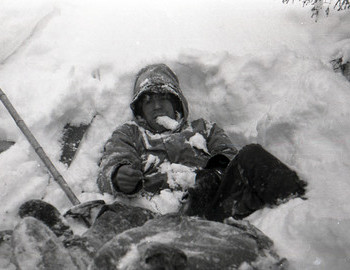
They had families, friends, ambitions, and ordinary lives before the expedition. They were not characters created for a horror story. The photographs show them joking, resting, preparing meals, and traveling through the mountains together.
The mystery has sometimes overshadowed their identities. Igor Dyatlov was a determined young leader. Zinaida Kolmogorova was known for her energy and courage. Lyudmila Dubinina was a student with a strong personality. Semyon Zolotaryov was older than the others and had military experience. Each member of the group had a life beyond the mountain.
Their deaths became famous because the circumstances were strange. But the tragedy should also be remembered as the loss of nine human beings who were loved by others.
Why the Story Still Feels Supernatural
The Dyatlov Pass incident is not proven to involve ghosts or supernatural forces. Yet it feels haunting because so many details appear to defy common sense.
Why would experienced hikers leave warm clothes behind?
Why would they cut their way out of their own tent?
Why did they move toward the forest instead of remaining together?
Why were some bodies found far from the camp?
Why did no one return to retrieve the equipment?
These questions create the impression that something extraordinary happened. But fear itself can produce extraordinary behavior. People who believe they are facing immediate death may make decisions that seem irrational later.
The hikers may have acted logically based on what they perceived at the time. Their tragedy may have resulted from a danger that was invisible in the darkness: shifting snow, violent wind, a collapsing shelter, or a combination of natural forces.
We know how the story ended. We do not know what the hikers believed was happening during those final minutes.
The Later Investigation
Decades later, renewed investigations examined the avalanche theory and other possible explanations. Modern researchers used topographical data, weather models, and simulations to test whether a snow slab could have formed above the tent.
These studies showed that an avalanche-like event was possible under certain conditions. Wind could have moved snow onto the slope, and the hikers’ excavation of the campsite may have weakened the area.
The modern conclusion generally favors a natural disaster, particularly a slab avalanche combined with severe weather and disorientation. Russian investigators have also described the incident as the result of an overwhelming natural force.
Still, because the original evidence is incomplete and the mountain has changed over time, no explanation has eliminated every uncertainty.
The case remains technically unresolved in the public imagination—not because every theory is equally likely, but because the final moments of the hikers can never be reconstructed with certainty.
A Mountain That Keeps Its Secrets
Today, Dyatlov Pass attracts researchers, hikers, journalists, and visitors fascinated by its history. The area is still remote, exposed, and dangerous. Its silence is part of what gives the story such power.
There are no witnesses who can describe the final night. There is no surviving diary entry explaining the decision to leave the tent. There is no message, radio transmission, or final confession.
Only scattered clues remain:
A torn tent.
Footprints in the snow.
A dying fire.
A few photographs.
And nine bodies discovered in the wilderness.
The mountain did not need anything supernatural to become frightening. Its cold, darkness, and isolation were enough.
The Final Mystery
The Dyatlov Pass incident may eventually be explained as a tragic chain of natural events. An unstable snow layer may have threatened the tent. The hikers may have escaped in darkness, believing they would return. Wind and snowfall may have erased their route. Hypothermia may have taken the first victims, while later falls and snow accumulation caused the injuries found in the ravine.
That explanation is possible—and perhaps even probable.
But probability is not the same as certainty.
The final moments remain hidden beneath the snow and the passing decades. We may understand the physical dangers that surrounded the hikers, but we can never know exactly what they saw, heard, or feared.
That is what makes the story so haunting. The mountain did not simply take nine lives. It also took the explanation with them.
And after all these years, Dyatlov Pass still stands in the frozen silence of the Urals, keeping the last secret of its lost hikers.