Where the Atlantic Keeps Its Wildest Secrets
There are places in the world that seem designed for postcards—and then there are places that make postcards feel inadequate.
The Azores belong firmly to the second category.
Scattered across the Atlantic Ocean between Europe and North America, this Portuguese archipelago is a chain of nine volcanic islands shaped by fire, wind, rain, and the restless sea. Here, emerald mountains rise abruptly from deep blue water. Crater lakes fill ancient volcanoes. Hydrangeas spill across country roads in waves of blue and white. Whales move through offshore waters, hot springs steam beneath tropical foliage, and small villages cling to coastlines built from black volcanic stone.
The Azores are beautiful, but beauty is only the beginning. What makes them unforgettable is their atmosphere: the sensation that you have stepped into a landscape still being written by nature.
This is a place where clouds can move across a mountain in minutes, where sunshine and mist share the same afternoon, and where the ocean is never far from view. The islands feel remote without being inaccessible, peaceful without being empty, and adventurous without requiring you to be an extreme traveler.
The Azores do not demand that you rush from one attraction to another. They invite you to slow down and notice things: the sound of waves striking a lava cliff, the scent of wet earth after rain, the taste of pineapple grown in a greenhouse, the sudden appearance of a crater lake through a veil of mist.
They are not simply a destination.
They are a mood.
A volcanic world in the middle of the Atlantic
The Azores were born from volcanic activity along the Mid-Atlantic Ridge, where tectonic plates meet beneath the ocean. Their origins are visible everywhere. The land is dark, rugged, and dramatic, softened by an extraordinary abundance of greenery.
Volcanoes define the islands’ geography, but water defines their character. Rain fills calderas and creates luminous lakes. Natural springs bubble from the earth. Waterfalls plunge through dense forests. The sea surrounds every road, village, pasture, and mountain.
The nine islands are usually grouped into three geographical clusters:
- The Eastern Group: São Miguel and Santa Maria
- The Central Group: Terceira, Graciosa, São Jorge, Pico, and Faial
- The Western Group: Flores and Corvo
Each island has its own personality. São Miguel is the largest and most varied, with crater lakes, thermal pools, tea plantations, and lively towns. Pico is dominated by Portugal’s highest mountain and its remarkable vineyards. Faial is known for its marina and volcanic landscapes. Flores is a green, waterfall-filled dream. Terceira blends volcanic scenery with colorful architecture and a rich cultural life.
Island-hopping is possible, but one of the joys of the Azores is accepting that each island deserves time. A week may reveal the highlights. Several weeks begin to reveal the rhythm.
São Miguel: the green heart of the Azores
 If the Azores had a natural capital, it would be São Miguel.
Known as the “Green Island,” São Miguel is a place of almost theatrical contrasts. Rolling pastures stretch toward volcanic ridges. Hydrangea-lined roads wind around crater lakes. Small churches appear between fields. Along the coast, black lava cliffs drop into the Atlantic, while thermal springs invite travelers to sink into warm, mineral-rich water.
The island’s most famous landscape is Sete Cidades, a vast volcanic caldera containing two lakes whose colors appear to differ—one blue, one green—depending on the light, vegetation, and reflections. From the viewpoints above the crater, the scene seems almost too perfectly composed: a quiet village at the water’s edge, steep green slopes, and twin lakes nestled inside the remains of an ancient volcano.
Local legend tells of a princess and a shepherd whose forbidden love ended in tears, forming the blue and green lakes. Whether or not you believe the story, it captures something essential about the Azores. These landscapes encourage myths. They look as though they have been waiting for one.
A visit to Sete Cidades should not be limited to a quick viewpoint stop. Walk along the crater rim, descend into the village, and take time to see how the landscape changes from above and below. From the heights, the caldera feels monumental. At lake level, it becomes intimate: quiet roads, gardens, church towers, and water moving gently beneath the mountains.
Lagoa do Fogo: the lake that feels untouched
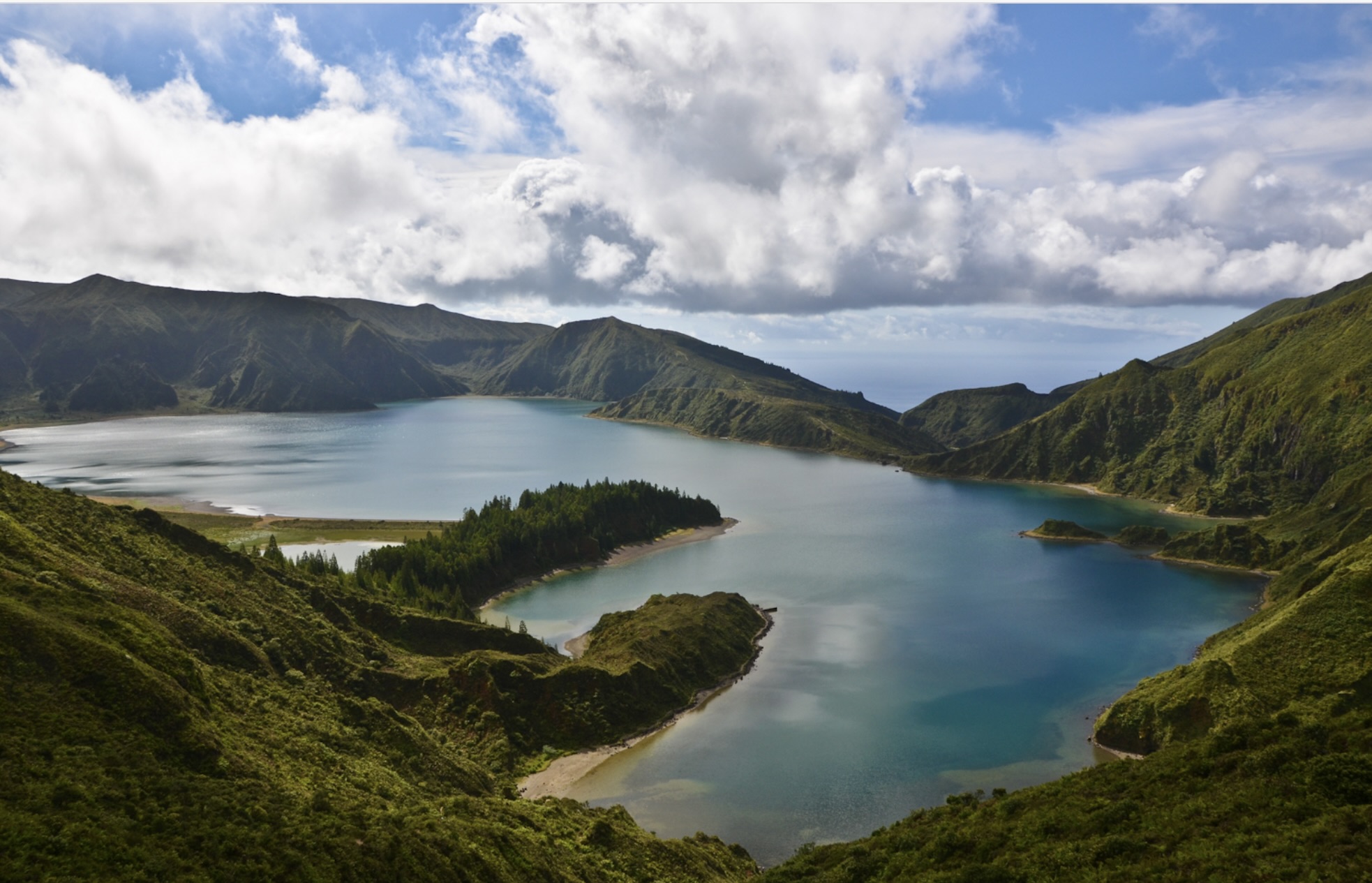
Lagoa do FogoLagoa do Fogo, or “Lake of Fire,” is one of the most breathtaking places in the archipelago.
Set high inside a volcanic crater, the lake is surrounded by protected slopes and pale beaches. Its beauty is not ornamental; it is elemental. There are no grand buildings competing for attention, only ridges, water, sky, and the wind moving through the grasses.
The road to Lagoa do Fogo climbs through changing scenery. One moment you are passing green fields and grazing cattle; the next, you are above the clouds, looking across a landscape that seems to belong to another planet.
On a clear day, the lake appears intensely blue. When clouds gather, the entire scene becomes mysterious. Mist slides across the crater walls, revealing and concealing the water in turns. This is one of the Azores’ great lessons: the weather is not an inconvenience. It is part of the scenery.
Hikers can descend toward the lake, where the scale changes again. From above, Lagoa do Fogo looks like a jewel set into the mountain. From the shore, it feels enormous and secluded, a silent body of water held within the earth.
Furnas: where the island cooks beneath your feet
In the village of Furnas, São Miguel reveals its volcanic nature in the most delicious way possible.
The region is famous for its geothermal activity. Steam rises from the ground, mineral-rich waters bubble through pools, and the air carries a faintly metallic scent that reminds you the volcano is not truly gone—it is simply sleeping.
Furnas is also known for cozido das Furnas, a traditional stew cooked slowly in the hot volcanic earth. Large pots are lowered into geothermal ground and allowed to cook for hours. The result is a hearty dish of meat, vegetables, and sausage, infused with the distinctive character of the place.
Eating it is more than a meal. It is a conversation with the landscape.
Before lunch, visitors can explore the fumaroles and boiling springs around the village. Afterward, they can settle into the warm waters of Parque Terra Nostra, one of the island’s most famous gardens. The park combines luxuriant subtropical vegetation with a large thermal pool, creating an experience that feels both refined and primal.
You may enter the water golden with minerals, surrounded by enormous ferns, palms, camellias, and ancient trees. Steam rises around you. Rain may begin to fall. Somewhere nearby, the earth continues to breathe.
Tea plantations and the taste of the Atlantic
 São Miguel is home to some of Europe’s most unusual tea plantations.
At places such as Gorreana, rows of tea bushes cover the hills in carefully textured green patterns. The setting is extraordinary: tea growing in the middle of the Atlantic, beneath a climate moderated by ocean winds and frequent rain.
The plantations are peaceful and open to visitors. You can walk among the bushes, see how tea is processed, and taste the finished product while looking out over the hills. There is something deeply satisfying about drinking tea in the landscape where it was grown.
The experience also captures the Azorean approach to agriculture. Nothing feels hurried. Crops are shaped by the climate, the terrain, and the limits of island life. Pineapples, tea, dairy products, wine, and seafood all carry a strong sense of place.
Even a simple cup of tea becomes a reminder that the Azores are not merely scenic islands. They are living, working landscapes.
Pico: mountain, ocean, and vineyards
 Pico is an island with a presence.
Its namesake mountain rises dramatically from the center of the island, reaching 2,351 meters above sea level. Mount Pico is the highest mountain in Portugal, and its dark volcanic slopes dominate the horizon from almost every direction.
The mountain is beautiful from a distance, but climbing it is an entirely different experience. The ascent passes through volcanic terrain, with the Atlantic spreading outward in all directions. On a clear day, the neighboring islands of Faial and São Jorge may appear across the water.
Pico demands preparation and respect. The weather can change quickly, and the terrain is steep and uneven. But for those who make the climb, the reward is not only the summit. It is the changing world along the way: rough lava, open sky, clouds moving beneath you, and the sensation of standing at the center of an ocean.
Even if you never climb the mountain, Pico’s silhouette becomes a companion. It appears behind villages, vineyards, roads, and harbors. It turns ordinary moments into photographs.
Vineyards built from lava
 Pico’s vineyards may be among the most remarkable in the world.
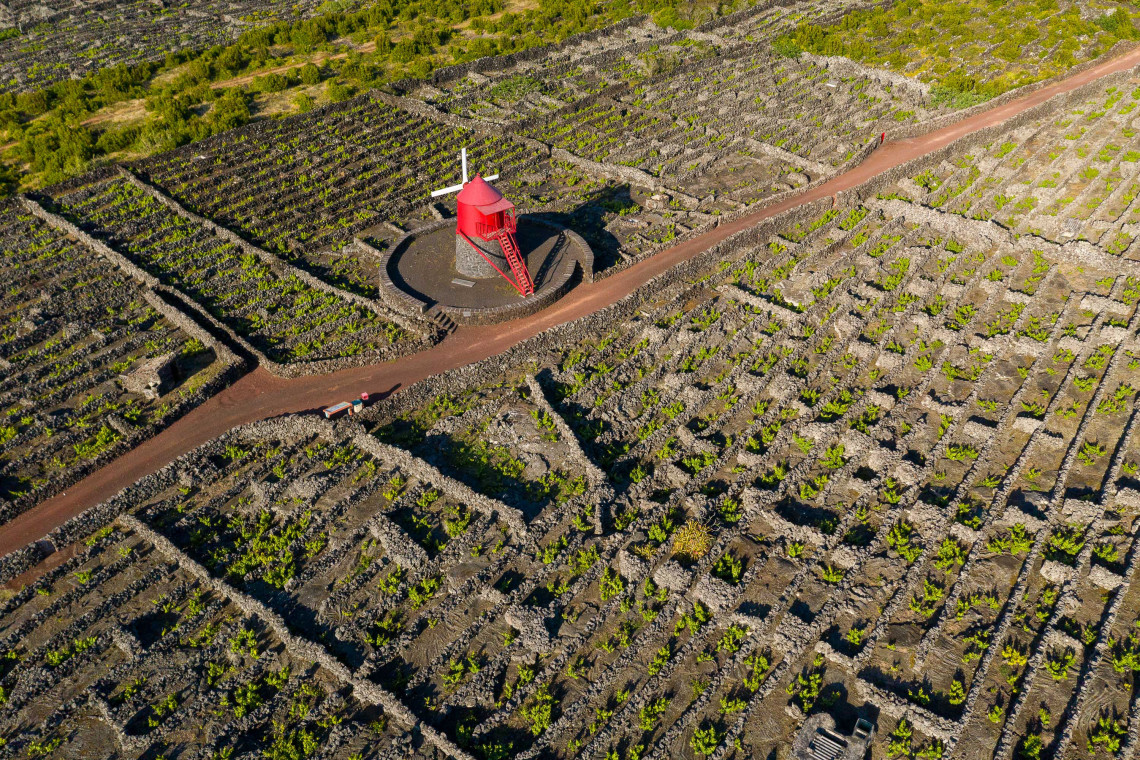
Here, vines grow in dark volcanic soil close to the sea. To protect them from salt-laden winds, generations of islanders built intricate walls from black basalt. These small stone enclosures, known locally as currais, create a vast geometric pattern across the landscape.
From above, the vineyards look like a dark mosaic. Up close, they reveal extraordinary patience. Every wall was built by hand. Every vine grows in a place that appears, at first glance, too rugged for agriculture.
The result is a landscape where human labor and volcanic force are inseparable. The stone came from the earth; the walls were arranged by people; the vines found a way to thrive between them.
Pico wine carries that story. It is not simply something to taste in a glass. It is a product of wind, rock, ocean, resilience, and ingenuity.
A visit to the vineyards is best taken slowly. Walk between the walls. Listen to the wind. Notice how close the sea is. Then taste the wine and imagine the generations who transformed an apparently hostile landscape into one of the Azores’ most distinctive cultural treasures.
Faial: blue hydrangeas and the harbor of sailors
Whale-watching in the AzoresFaial is often called the Blue Island because of the abundance of blue hydrangeas that line its roads and fields. In summer, the flowers create vivid borders against the island’s green hills and black stone walls.
The island’s center is dominated by Caldeira do Faial, a great volcanic depression wrapped in rich vegetation. Walking around its rim provides expansive views into the crater and across the surrounding countryside.
At the western end of the island lies Capelinhos, a stark volcanic landscape formed by an eruption in the twentieth century. The contrast is remarkable. While much of Faial is lush and soft, Capelinhos feels raw, wind-scoured, and almost lunar. The lighthouse standing near the shore appears partly claimed by the land, a reminder that the island is still changing.
Faial is also known for Horta, a harbor that has welcomed sailors crossing the Atlantic for generations. Yacht crews traditionally leave painted messages on the marina walls, turning the harbor into an open-air gallery of ocean journeys.
There is poetry in the tradition. Travelers arrive from far away, pause in Horta, and leave behind a small mark before continuing across the sea.
Terceira: color, celebration, and volcanic interiors
 Terceira brings a different energy to the archipelago.
The island’s historic center, Angra do Heroísmo, is one of the Azores’ most beautiful towns. Its streets are lined with colorful façades, traditional balconies, elegant churches, and Portuguese paving stones. The town’s history is deeply connected to the Atlantic, and its harbor once played an important role in maritime routes between Europe, Africa, and the Americas.
Terceira is also an island of festivals. Religious celebrations, music, food, and traditional bull-running events form part of the local cultural calendar. The atmosphere can shift quickly from quiet village life to exuberant public celebration.
Beneath the surface, Terceira offers another kind of wonder. At Algar do Carvão, visitors can descend into the interior of an ancient volcanic chimney. The walls are lined with moss and vegetation, and light enters from above through the opening of the volcano.
It is a rare experience: standing inside the architecture of an eruption.
Flores: the island of waterfalls
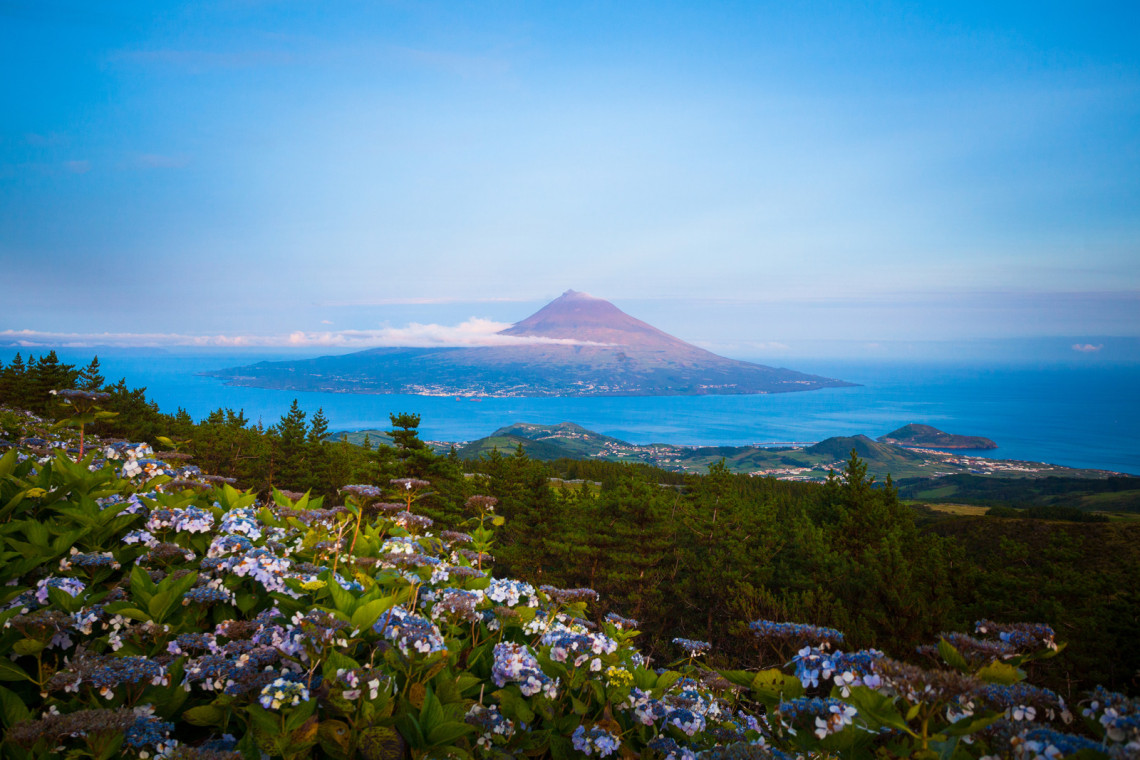 Flores is perhaps the island that most closely resembles a dream.
Its name means “flowers,” and the landscape lives up to it. Mountains are covered in thick vegetation, hydrangeas bloom beside narrow roads, and waterfalls pour down the cliffs in astonishing numbers.
The island feels wetter, wilder, and more remote than the eastern islands. Lakes occupy ancient volcanic craters. Streams cross the landscape. The coastline is rugged, and the sea often appears in flashes between hills and clouds.
One of Flores’s signature experiences is simply driving. The roads are narrow and winding, but every bend may reveal a new waterfall, a green valley, or a distant view of the Atlantic.
Here, nature is not arranged for easy viewing. It surrounds you completely.
The island rewards travelers who enjoy walking, photography, birdwatching, and quiet exploration. It is a place for long pauses and unplanned discoveries—the kind of destination where a road marked on a map becomes the beginning of an afternoon adventure.
Santa Maria: golden beaches and a gentler light
Compared with the darker volcanic landscapes of its neighbors, Santa Maria often feels surprisingly sunlit.
The island is known for warmer weather, pale beaches, and landscapes touched with golden and ochre tones. Its terrain is gentler in places, and its coastal scenery has a more Mediterranean character.
Santa Maria is an excellent choice for travelers who want the Azores’ volcanic identity combined with opportunities for swimming, coastal walks, and relaxed village life. The island’s beaches are among the most inviting in the archipelago, while its cliffs offer beautiful views across the Atlantic.
The contrast between Santa Maria and São Miguel is a reminder that the Azores are not one landscape repeated nine times. Each island has its own geology, climate, traditions, and visual language.
São Jorge: cliffs, pastures, and hidden coastal villages
São Jorge is a long, narrow island known for dramatic cliffs and high plateaus. Its distinctive coastal plains, called fajãs, were formed by landslides and lava flows. Many are accessible only by winding roads or hiking trails, and some contain small settlements surrounded by tropical vegetation.
The island is also famous for its cheese, a firm and flavorful product made from local milk. Pastures cover the highlands, and cows are an unmistakable part of the scenery.
Walking in São Jorge is an exercise in perspective. From the plateau, the island appears open and pastoral. At the edge of a cliff, the land falls suddenly toward the sea. Far below, a tiny coastal village may seem almost impossibly distant.
The fajãs are among the most atmospheric places in the Azores. They feel sheltered from the world, hidden beneath immense green walls and open to the ocean.
Graciosa and Corvo: quiet islands with strong identities
Graciosa is smaller and gentler, with whitewashed villages, rolling agricultural land, and a slower pace. Its volcanic identity appears in places such as Furna do Enxofre, a remarkable volcanic cave with a subterranean lake.
Corvo, the smallest of the Azores’ inhabited islands, is defined by isolation and scale. Its volcanic caldera occupies much of the island, and the settlement itself feels intimate—a community shaped by the sea and by the practical realities of living far from the mainland.
These islands may not have the same number of famous landmarks as São Miguel, but that is part of their appeal. They offer something increasingly rare: the chance to experience a place without feeling that it has been packaged for constant consumption.
Whales, dolphins, and the living Atlantic
A whale-watching boat in the AzoresThe ocean around the Azores is one of the archipelago’s greatest treasures.
Whale-watching excursions leave from several islands, especially São Miguel, Pico, and Faial. The waters are visited by a remarkable variety of whales and dolphins, including species that migrate through the Atlantic and others that pass close to the islands seasonally.
The experience is not guaranteed—and that uncertainty is important. A responsible excursion is not a performance with a promised appearance. It is time spent observing the ocean, listening to guides, and waiting for signs of movement.
A dark shape may appear on the horizon. A fin may cut through the surface. A blow may rise in the distance and vanish before you can fully process it.
Then, suddenly, a whale may surface beside the boat.
The encounter can be brief, but it changes the entire scale of the sea. What looked like empty water becomes full of life. The Atlantic stops being a backdrop and becomes the main character.
The food of the islands
Azorean cuisine is shaped by the same forces as the landscape: volcanic soil, ocean waters, pasture, and a cool, humid climate.
Seafood is central. Fresh fish, limpets, octopus, and shellfish appear in local dishes, often prepared simply so the ingredients remain the focus. Beef is also important, especially on São Miguel, where cattle graze on exceptionally green pasture.
Cheese from São Jorge is one of the islands’ best-known products. Pineapples from São Miguel are smaller and more intensely aromatic than many varieties found elsewhere. Tea, passion fruit, local wines, and traditional breads add further layers to the culinary identity of the archipelago.
And then there is the food cooked by the volcano.
In Furnas, meals emerge from the ground. In other places, seafood is grilled close to the shore, while wine is produced among basalt walls beneath Mount Pico.
The food of the Azores is not fussy. It is generous, local, and connected to the land. A meal here often feels like a continuation of the landscape rather than a separate experience.
When to visit the Azores
The Azores have a mild maritime climate, but the weather can change quickly throughout the year.
Summer generally offers the most reliable conditions for hiking, whale watching, swimming, and exploring the islands. It is also when hydrangeas are especially striking.
Spring brings lush vegetation, flowers, and a quieter atmosphere. The islands feel intensely green, and the weather can be beautifully fresh.
Autumn offers changing light, fewer visitors, and excellent conditions for enjoying local food and wine.
Winter is cooler and wetter, but the Azores remain temperate compared with many other European destinations. Storms can create dramatic seas, and the islands take on a more solitary mood.
Whenever you go, pack layers and waterproof clothing. The Azores can offer sunshine, fog, rain, and wind in a single day. The best approach is not to fight the weather but to accept it as part of the experience.
How to travel through the archipelago
The Azores are best explored with flexibility.
São Miguel can be experienced as a single-island journey, especially for first-time visitors. It has enough variety to fill a week or more. If you want to explore further, flights and seasonal ferries connect many of the islands, although schedules can be affected by weather.
A central-island itinerary might combine:
- Pico, for the mountain and vineyards
- Faial, for Horta and Capelinhos
- São Jorge, for cliffs and fajãs
- Terceira, for history and culture
The western islands, Flores and Corvo, feel more remote and are ideal for travelers who want dramatic landscapes and a quieter pace.
A rental car is often the most convenient way to explore, particularly on São Miguel, Terceira, Pico, and Flores. Roads can be narrow, and weather may reduce visibility, so slow driving is part of the experience.
The Azores reward curiosity more than rigid planning. Leave room for a viewpoint you did not expect, a village festival, a short walk that becomes a long one, or a weather delay that leads to an entirely different afternoon.
What the Azores teach us about beauty
The most memorable thing about the Azores is not any single lake, mountain, village, or waterfall.
It is the relationship between them.
The islands are beautiful because they remain untidy in the best possible sense. Nature has not been completely controlled. Fog is allowed to hide the view. Roads bend around mountains rather than cutting through them. Villages are small. Beaches can be empty. The ocean still determines the pace of life.
The Azores remind us that travel does not always need to be dramatic. Sometimes the most powerful experiences are quiet:
- Watching rain move across a crater lake
- Standing beside a steaming volcanic spring
- Drinking tea on a green hillside
- Hearing the Atlantic below a cliff
- Seeing a whale surface in open water
- Walking through vineyards built from black stone
- Eating a simple meal made from ingredients grown or caught nearby
This is why the Azores linger in the imagination long after the journey ends. They do not overwhelm you with spectacle and then disappear. Instead, they enter gradually—through color, weather, taste, sound, and memory.
Final thoughts: an invitation from the Atlantic
The Azores are not a destination for travelers who want to collect landmarks as quickly as possible.
They are for those who want to feel a place.
Feel the damp air of a mountain trail. Feel the heat rising from volcanic ground. Feel the salt wind on a coastal road. Feel the sudden stillness of a lake inside an ancient crater.
The archipelago offers adventure, but it also offers restoration. It is possible to hike in the morning, soak in a thermal pool in the afternoon, and watch the sunset over the ocean in the evening. It is possible to spend an entire day following waterfalls, visiting small cafés, or simply driving until the next beautiful view appears.
Some places ask to be photographed.
The Azores ask to be remembered.
And when you finally leave—when the green slopes recede beneath the airplane window and the islands become small shapes in the Atlantic—you may find yourself thinking not about what you saw, but about how the islands made you feel:
calmer, more attentive, and just a little closer to the wild world beneath the surface.