Scotland’s Great Highland Escape
Scotland is a country of dramatic landscapes, ancient legends, and breathtaking natural beauty. Among its many extraordinary destinations, Loch Lomond and The Trossachs National Park stands out as one of the most beautiful. With its deep freshwater loch, rugged mountain peaks, peaceful forests, quiet islands, and charming villages, the park captures the spirit of Scotland in one unforgettable place.
Located in central Scotland, only a short journey from Glasgow and Edinburgh, Loch Lomond and The Trossachs offers visitors the rare opportunity to experience wild Highland scenery without travelling to the farthest corners of the country. It is a place where the landscape changes constantly. One moment, the road may pass through dense woodland; the next, it opens onto a vast blue loch surrounded by mountains disappearing into the mist.
A Landscape That Feels Almost Unreal
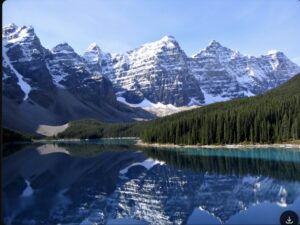
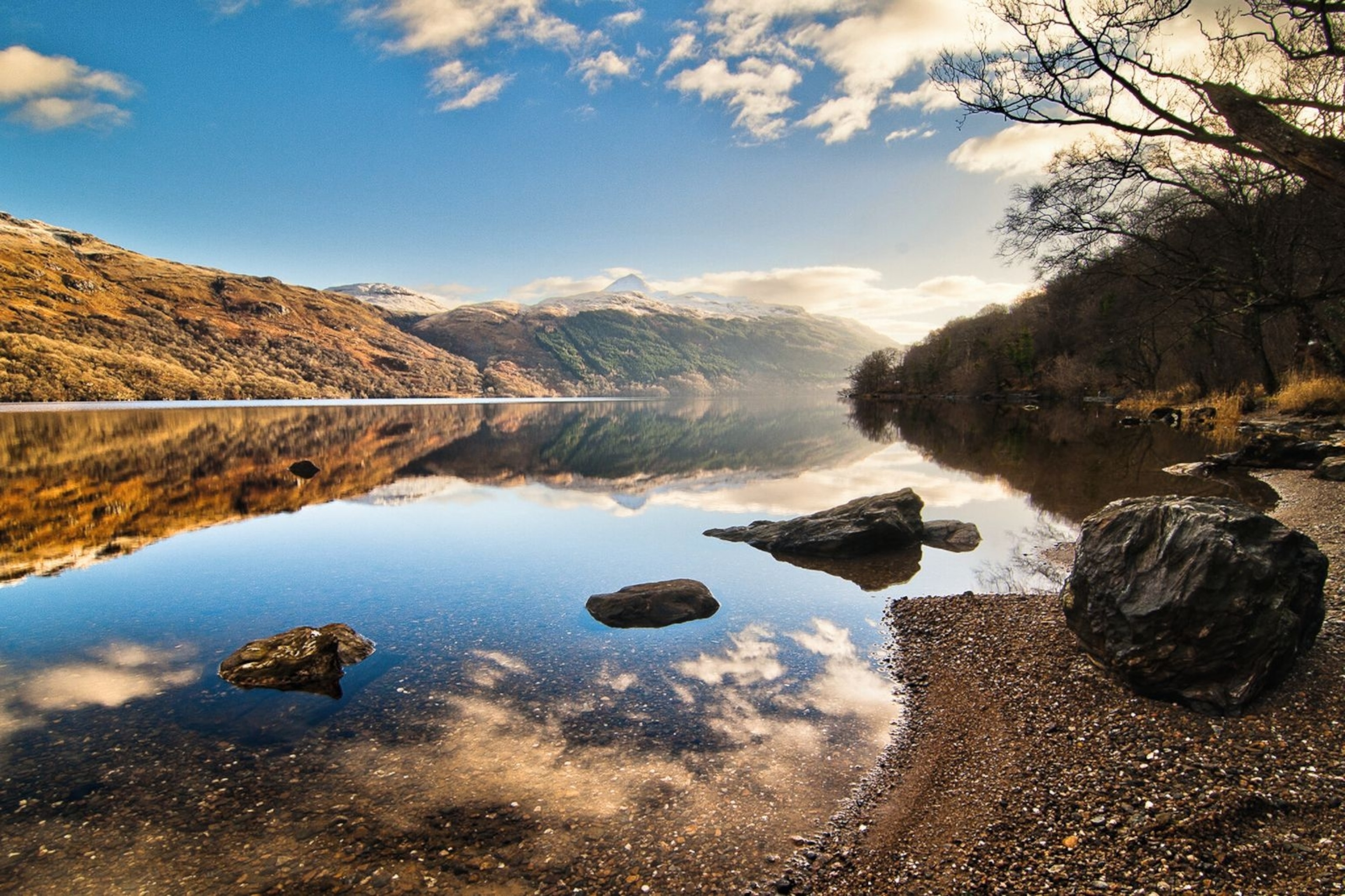
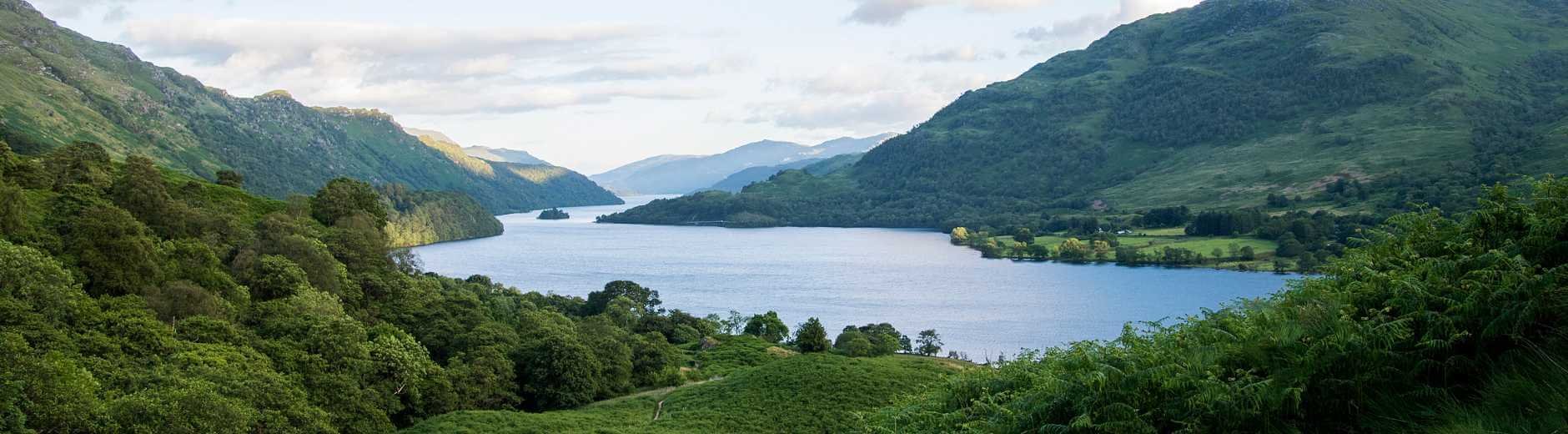
The heart of the park is Loch Lomond, one of Scotland’s most famous bodies of water. Its surface stretches beneath the mountains like a great silver mirror, reflecting changing skies, drifting clouds, and the dark green slopes of the surrounding hills. The loch contains numerous islands, each adding another layer of character to the landscape.
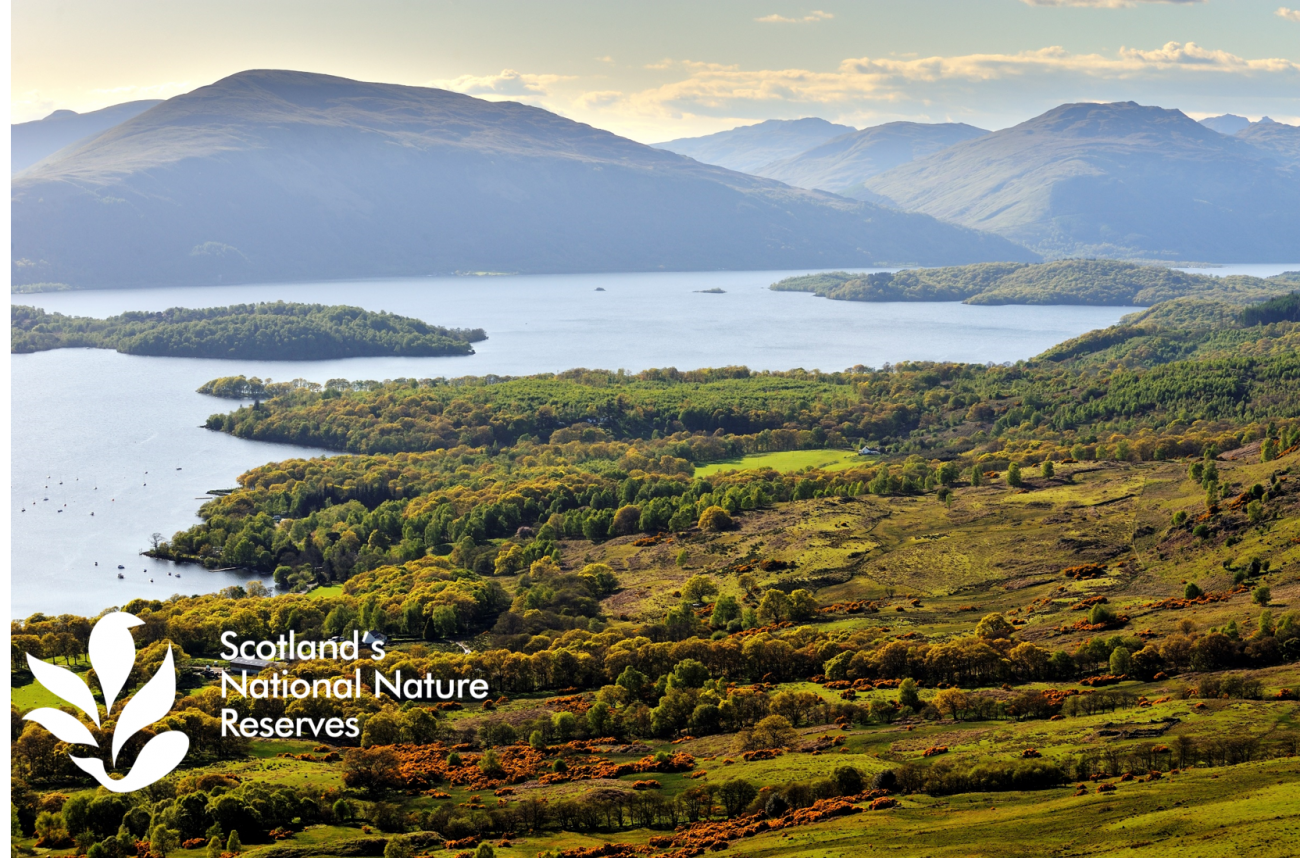
Some islands are wooded and mysterious, while others are open and peaceful. From the shoreline, they appear to float quietly across the water, creating a scene that has inspired generations of poets, artists, photographers, and travellers.
The beauty of Loch Lomond is not limited to sunny days. In fact, the park can be even more impressive when the weather is dramatic. Scotland’s famous mist may settle over the hills, rain may darken the water, and clouds may gather around the peaks. Rather than diminishing the scenery, these conditions often give the landscape a deeper and more mysterious atmosphere.
The Trossachs: Mountains, Forests, and Hidden Valleys
Beyond the loch lies The Trossachs, a region known for its rolling mountains, narrow glens, peaceful forests, and winding roads. The landscape is less severe than the high peaks of the Scottish Highlands, yet it remains powerful and dramatic. Rounded hills rise above lochs, waterfalls cut through rocky valleys, and ancient forests provide shelter for wildlife.
The Trossachs has often been described as the “Highlands in miniature” because it contains so many of the landscapes associated with Scotland within a relatively compact area. Visitors can experience mountains, lakes, woodland, farmland, and historic villages all in the same journey.
This variety is one of the park’s greatest strengths. A single day can include a quiet walk through the forest, a boat trip across the loch, a mountain climb, and an evening beside a fire in a traditional village. Every part of the park offers something different, yet the entire region feels connected by its natural beauty.

Scotland’s First National Park
Loch Lomond and The Trossachs became Scotland’s first national park in 2002. Its creation reflected the importance of protecting the region’s landscapes, wildlife, cultural heritage, and communities while allowing people to enjoy them responsibly.
The park covers an extensive area and includes a mixture of privately owned land, working farms, forests, villages, historic sites, and protected natural habitats. It is not simply an empty wilderness. People have lived, worked, travelled, and built communities in this region for centuries.
The national park exists to balance conservation with public access. This means protecting fragile environments while supporting tourism, outdoor recreation, agriculture, forestry, and local businesses. It is a place where nature and human life exist side by side.
The region’s history stretches back thousands of years. Archaeological evidence shows that people lived in and travelled through the area long before the modern nation of Scotland was formed. Ancient stones, old paths, burial sites, castles, churches, and traditional settlements all reveal the deep human history of the landscape.
A Landscape of Stories and Legends
Scotland’s scenery has always been connected to storytelling, and Loch Lomond is no exception. The loch is strongly associated with one of Scotland’s best-known traditional songs, “The Bonnie Banks o’ Loch Lomond.” Although the song has several interpretations, its emotional tone reflects the beauty and sadness often associated with Scottish history.
The region also contains stories of clans, battles, travellers, smugglers, and Highland communities. In earlier centuries, the mountains and glens could provide shelter and protection, while the lochs served as important routes through difficult terrain.
One of the most famous historic figures connected with the area is Rob Roy MacGregor, the legendary Highland outlaw and folk hero. Rob Roy lived during a period of political conflict and social change, and many locations around The Trossachs are associated with his life and reputation. Whether every story is completely accurate is difficult to know, but the legends remain an important part of the region’s identity.
As visitors move through the park, it is easy to imagine how different the landscape must have looked before modern roads, cars, and tourism. The mountains, water, and forests remain largely unchanged, allowing people to feel connected to an older Scotland.
Wildlife in the National Park
Loch Lomond and The Trossachs is home to a wide variety of wildlife. Red deer move through the hills and forests, while roe deer can sometimes be seen closer to woodland edges and rural areas. The park also supports foxes, badgers, otters, mountain hares, red squirrels, and many species of birds.
The lochs and rivers provide important habitats for fish and waterfowl. Golden eagles and other birds of prey may be seen soaring above the mountains, although sightings are never guaranteed. Part of the pleasure of visiting the park is accepting that nature follows its own rhythm.
A quiet walk may reveal footprints in the mud, movement among the trees, or the distant call of a bird. These small moments can be more memorable than the most famous viewpoints because they make the visitor feel like a participant in the living landscape rather than simply an observer.
The protection of these habitats is an important responsibility. Tourism brings economic benefits to the region, but large numbers of visitors can also place pressure on paths, wildlife, roads, and local communities. Respecting wildlife, keeping dogs under control, staying on marked trails, and taking rubbish home are simple ways to help preserve the park.
Walking Through Scotland’s Wild Beauty
 Walking is one of the best ways to experience the national park. There are gentle trails along the lochshore, woodland paths through the Trossachs, and challenging mountain routes for experienced hikers.
Ben Lomond is one of the most popular mountains in the park. Its summit offers spectacular views across Loch Lomond and the surrounding Highlands. On a clear day, the panorama is extraordinary: islands appear scattered across the loch, distant peaks rise along the horizon, and the water stretches far into the landscape.
However, mountain walking in Scotland should never be underestimated. Weather can change quickly, even during summer. Rain, wind, fog, and low temperatures can arrive without warning. Visitors should prepare carefully, wear suitable footwear, carry waterproof clothing, and check weather and route conditions before setting out.
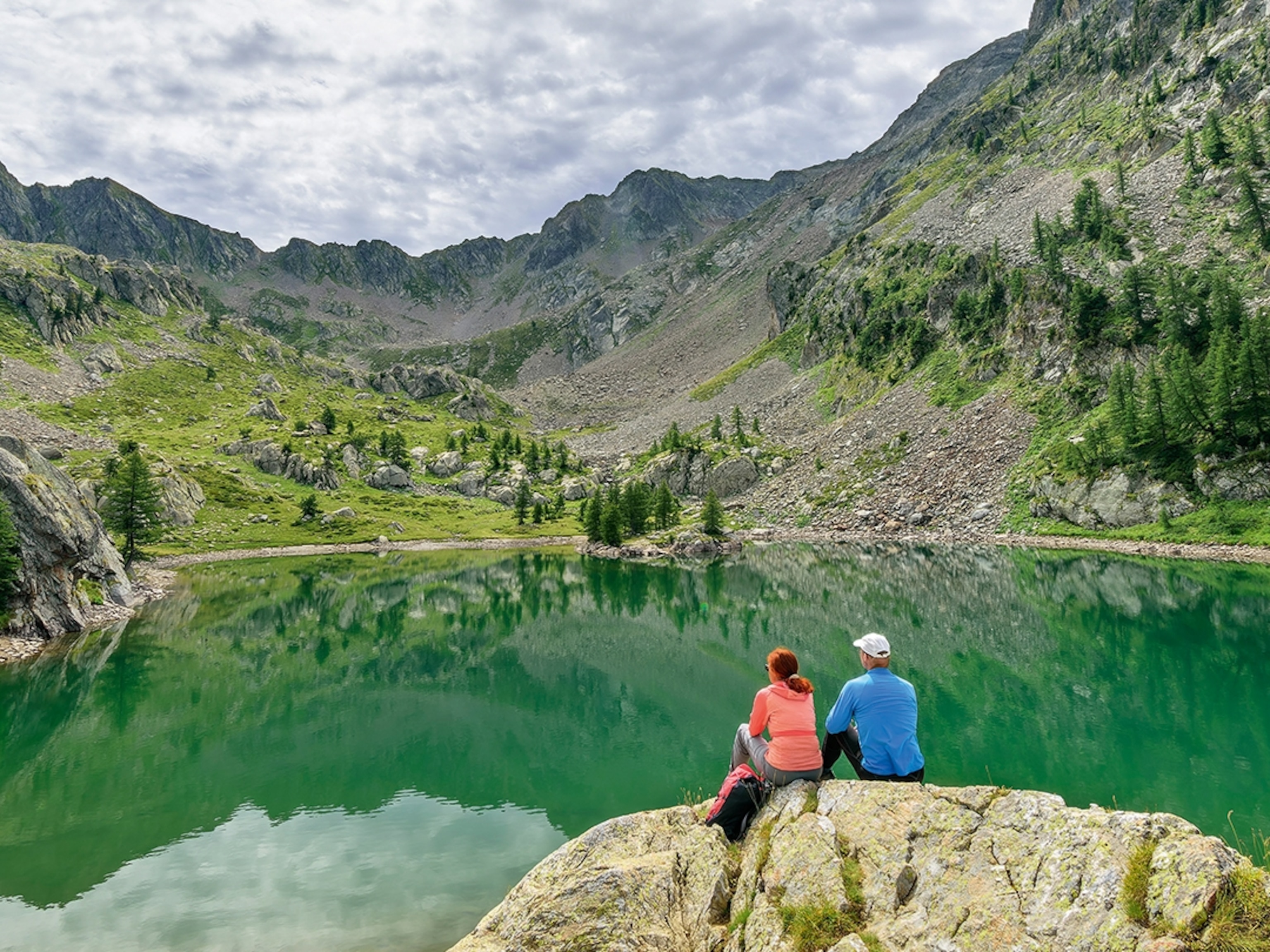
For those seeking a less demanding experience, the park offers countless shorter walks. Forest trails, riverside paths, and village routes allow visitors to enjoy the landscape at a slower pace. Some of the most beautiful moments come from simply sitting beside the water and watching the clouds move over the hills.
Water, Adventure, and Quiet Reflection
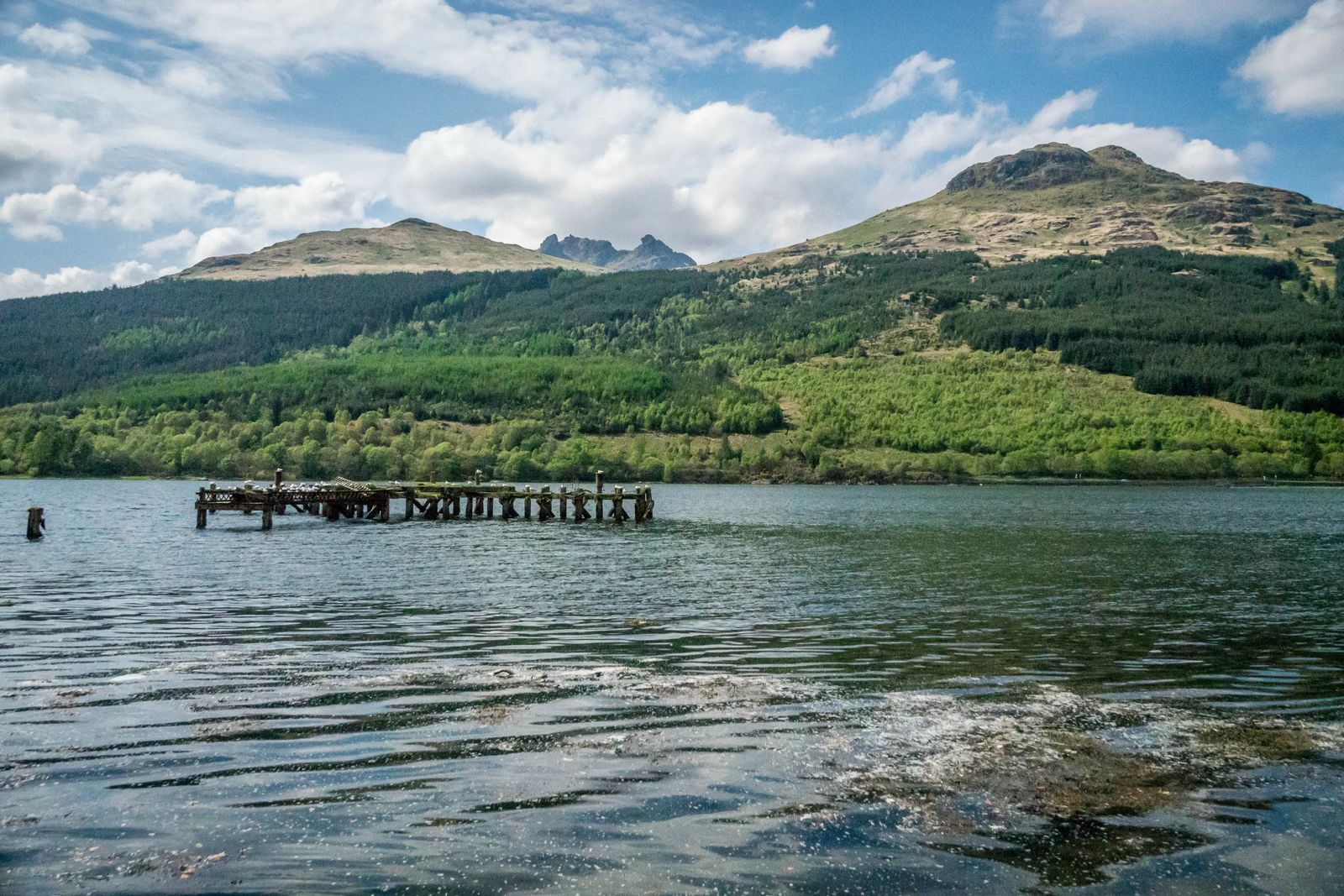
Loch Lomond provides opportunities for boating, kayaking, canoeing, paddleboarding, and fishing. Being on the water offers a completely different perspective. From the shoreline, the mountains appear impressive; from the centre of the loch, they seem to rise dramatically from the water itself.
A boat trip can reveal secluded bays, wooded islands, quiet beaches, and distant viewpoints that are difficult to reach by road. The movement of the boat, the sound of water against the hull, and the wide open sky create a strong sense of freedom.
Yet the park does not have to be experienced through adventure. Its greatest gift may be the opportunity to slow down. In a world dominated by screens, traffic, and constant noise, places such as Loch Lomond encourage a different way of living for a little while. The sound of wind through the trees becomes noticeable. A sunset feels important. A simple walk becomes enough.
Villages with Character
The national park is also home to villages and small communities that give the region warmth and personality. Places such as Balmaha, Luss, Callander, Aberfoyle, and Arrochar provide access to the landscape while offering cafés, accommodation, local shops, boat trips, and historic attractions.
Luss, located on the western shore of Loch Lomond, is particularly well known for its attractive stone cottages and views across the water. Its peaceful appearance has made it one of the most visited villages in the area.
Callander is often considered a gateway to The Trossachs. The town has long served travellers heading into the Highlands and remains a popular base for exploring the surrounding countryside.
These communities are an essential part of the national park. They are not merely stopping points for tourists; they are living places where people work, raise families, operate businesses, and maintain local traditions. Responsible visitors support the park by spending time in local communities and treating residents and public spaces with respect.

The Changing Seasons
Each season gives Loch Lomond and The Trossachs a different identity.
Spring brings fresh green leaves, brighter days, and new life to the forests. Waterfalls are often particularly impressive because of rainfall and melting snow from the hills. Birds become more active, and the landscape begins to awaken after winter.
Summer offers long days and more opportunities for walking, boating, and exploring. The hills are covered in rich vegetation, and the loch reflects the changing colours of the sky. Although summer is popular with visitors, early mornings and evenings can still provide moments of solitude.
Autumn transforms the park into a landscape of gold, copper, and deep red. The forests become especially beautiful, and the lower angle of the sunlight gives the mountains a warmer appearance. Misty mornings can make the lochs and valleys look almost dreamlike.
Winter reveals a quieter and more dramatic side of the park. Snow may cover the higher peaks, frost settles across the landscape, and the days become still. Even when the weather is cold and severe, the park possesses a remarkable beauty that feels raw and timeless.
Protecting the Future of the Park
The beauty of Loch Lomond and The Trossachs is powerful, but it is not indestructible. Climate change, habitat loss, litter, erosion, invasive species, and increasing visitor numbers all create challenges.
The national park’s future depends on cooperation between conservation groups, local residents, businesses, government agencies, and visitors. Protecting the area means more than preserving scenic views. It involves caring for forests, waterways, wildlife, historic sites, footpaths, and the communities that depend on the region.
Visitors can help by following the principles of responsible access. Leave no trace, avoid disturbing wildlife, use designated parking areas, respect private property, and follow local guidance regarding fires and camping. These actions may seem small, but together they make a significant difference.
A beautiful place remains beautiful only when people choose to care for it.
Why Loch Lomond and The Trossachs Is So Special
There are many national parks in Scotland, including the vast Cairngorms, and each has its own character. But Loch Lomond and The Trossachs is particularly special because it brings together so many elements of Scottish beauty in one region.
It has mountains, islands, forests, rivers, waterfalls, villages, wildlife, history, and legend. It is accessible enough for a short visit but vast enough to reward a lifetime of exploration. It can be adventurous or peaceful, dramatic or gentle, busy or completely quiet.
Most importantly, it does not feel like a landscape created for tourists. Its beauty is natural, powerful, and sometimes unpredictable. The rain, wind, mist, and changing light are not interruptions to the experience; they are part of what makes Scotland unforgettable.
A Final Reflection
Standing beside Loch Lomond, it is easy to understand why this region has inspired so many songs, stories, and journeys. The water moves quietly beneath the mountains, the forests shift in the wind, and clouds travel slowly across the sky. There is a sense of permanence in the landscape, even as everything around it continues to change.
Loch Lomond and The Trossachs National Park is more than one of Scotland’s most beautiful places. It is a living expression of the country’s natural and cultural identity. For travellers seeking dramatic scenery, meaningful history, outdoor adventure, or simply a quiet escape from modern life, this remarkable corner of Scotland offers an experience that stays with you long after you leave.
Photo sources include National Geographic, NatureScot, National Parks UK, VisitScotland, and Wikimedia Commons.