Tasmania’s Granite Coast of Light, Sea, and Silence
There are places in the world that seem beautiful because of one unforgettable view. Freycinet National Park is different. Its beauty is not confined to a single beach, mountain, or photograph. It is found in the contrast between rose-coloured granite and deep blue water, in the wind moving through coastal forests, in the long curve of Wineglass Bay, and in the quiet feeling that arrives when the road disappears and the landscape takes over.
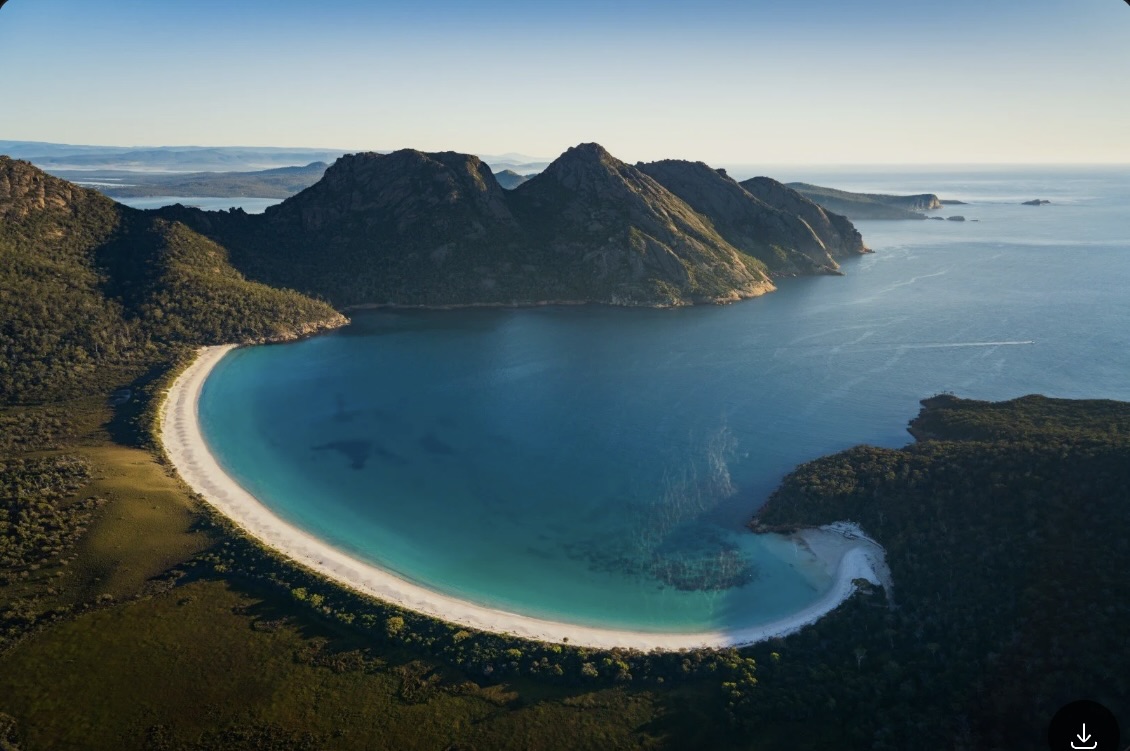
Located on Tasmania’s east coast, Freycinet National Park is widely regarded as one of Australia’s most spectacular natural areas. The park is best known for Wineglass Bay, whose brilliant white sand and clear turquoise water form one of the country’s most recognisable coastal scenes. Yet the bay is only the beginning. Beyond it lies a landscape of rugged peaks, sheltered coves, granite cliffs, native wildlife, coastal heathland, and walking trails that reveal a new perspective at almost every turn.
Calling Freycinet “the most beautiful national park in Australia” is, of course, a matter of personal opinion. Australia contains an astonishing variety of national parks, from Kakadu’s wetlands and ancient rock formations to the rainforests of Queensland and the alpine wilderness of Victoria. But Freycinet possesses a rare combination of elements: mountains close to the sea, beaches that appear almost impossibly white, dramatic geological formations, and a sense of space that makes the landscape feel both grand and intimate.
A peninsula shaped by time
Freycinet National Park occupies much of the Freycinet Peninsula, a long stretch of land extending into the Tasman Sea. The peninsula’s most striking feature is the Hazards, a chain of rugged granite mountains that rises dramatically above the surrounding coastline.
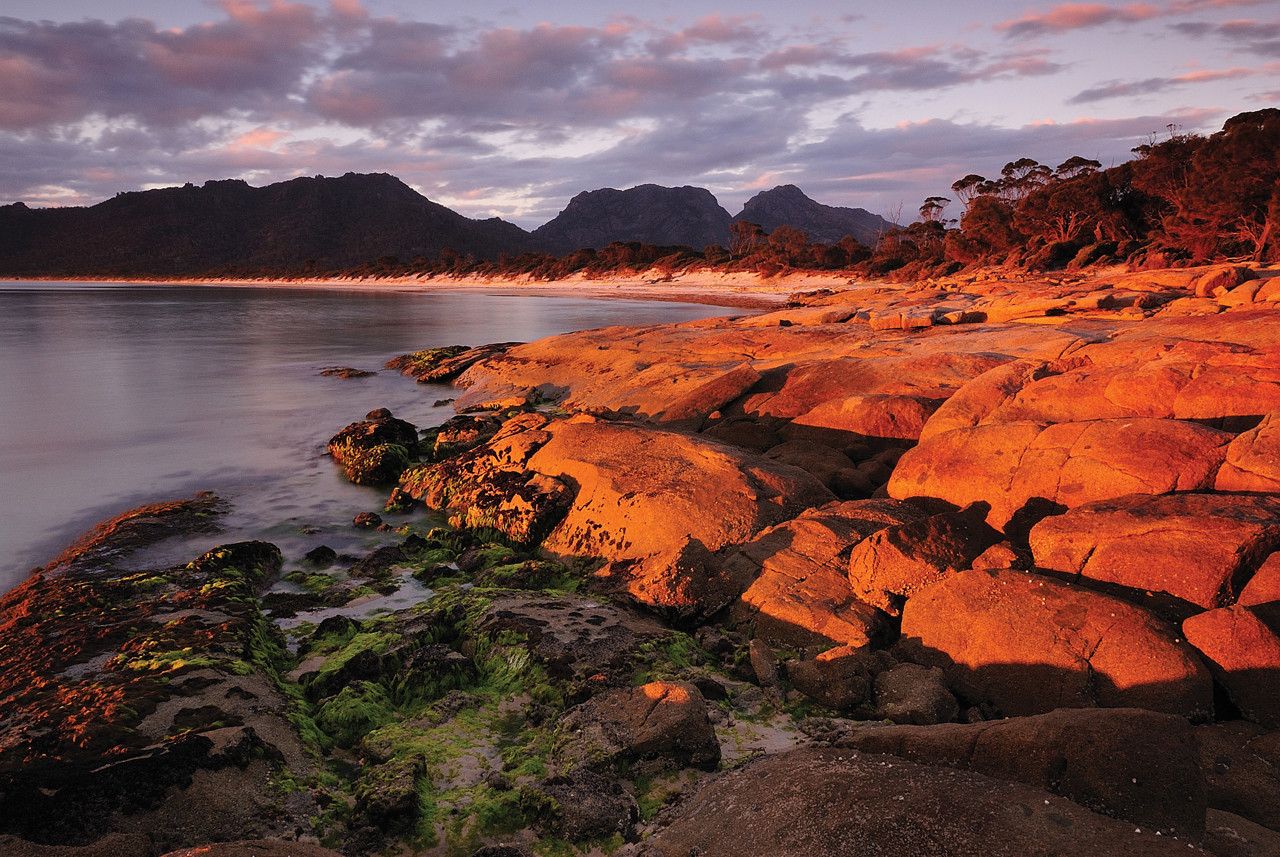
These mountains are famous for their warm pink and orange tones. Their colour comes largely from mineral-rich granite, which has been exposed and weathered over immense periods of geological time. Wind, rain, salt, ice, and shifting temperatures have gradually shaped the cliffs and slopes into the forms visitors see today.
The landscape is a reminder that beauty is often the result of slow change. Freycinet was not created in a moment. Its beaches, headlands, islands, and mountains are the product of geological forces operating over millions of years.
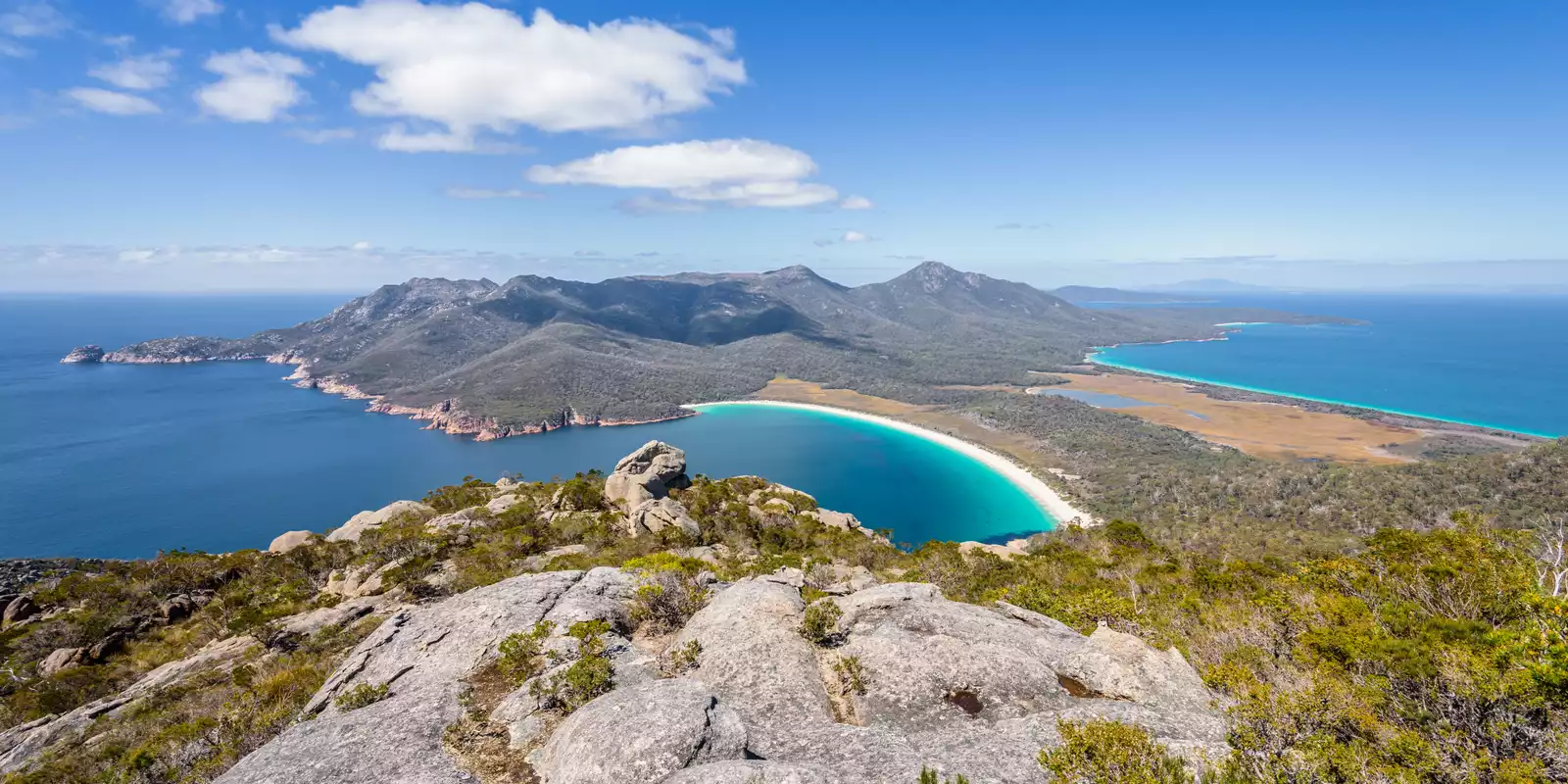
From a distance, the Hazards can appear almost sculpted. Their rounded forms glow at sunrise and sunset, while clouds move across their summits and change the appearance of the entire peninsula. In bright midday light, the granite looks pale and warm. In the evening, it can deepen into copper, rose, and violet.
This changing colour is one of Freycinet’s most memorable qualities. The park never looks exactly the same twice.
The ancient human history of Freycinet
Long before Freycinet became a national park or a destination for travellers, the area was connected to Aboriginal communities whose history on Tasmania extends back thousands of years.
The Freycinet Peninsula is part of the traditional Country of the Palawa people. Aboriginal communities lived with and cared for the land, waters, plants, and animals of the region. Coastal environments provided food, materials, and routes for movement, while the landscape carried cultural and spiritual significance.
This history is essential to understanding Freycinet properly. The peninsula is not an untouched landscape in the sense that it has never been influenced by people. Rather, it is a cultural landscape with a long human history—one that predates European settlement by many generations.
European names began appearing on maps in the late eighteenth and early nineteenth centuries. The peninsula was named after Louis de Freycinet, a French explorer whose expedition visited the region in the early 1800s. Like many Australian places, the name reflects the period of European exploration, but it exists alongside the much older Aboriginal history of the land.
The area also became associated with whaling, sealing, farming, and other forms of European activity. These industries affected the environment and communities of the region. Over time, however, increasing recognition of the peninsula’s natural importance helped lead to its protection.
Freycinet National Park was established in 1916, making it Tasmania’s oldest national park. Its creation reflected a growing belief that exceptional landscapes should be protected not only for economic use, but also for their ecological, cultural, recreational, and aesthetic value.
Today, the park’s management involves balancing conservation with tourism. Visitors come to admire the scenery, but they also have a responsibility to treat the land with care and respect.
Wineglass Bay: the image that made Freycinet famous
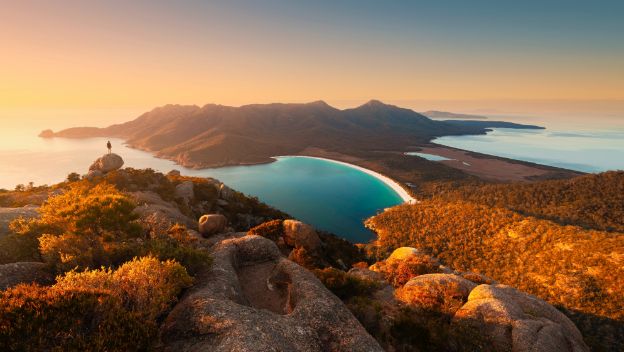
Wineglass Bay is the heart of Freycinet National Park’s international reputation.
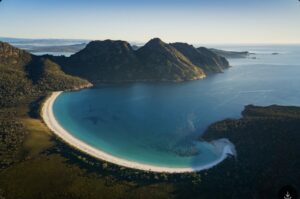
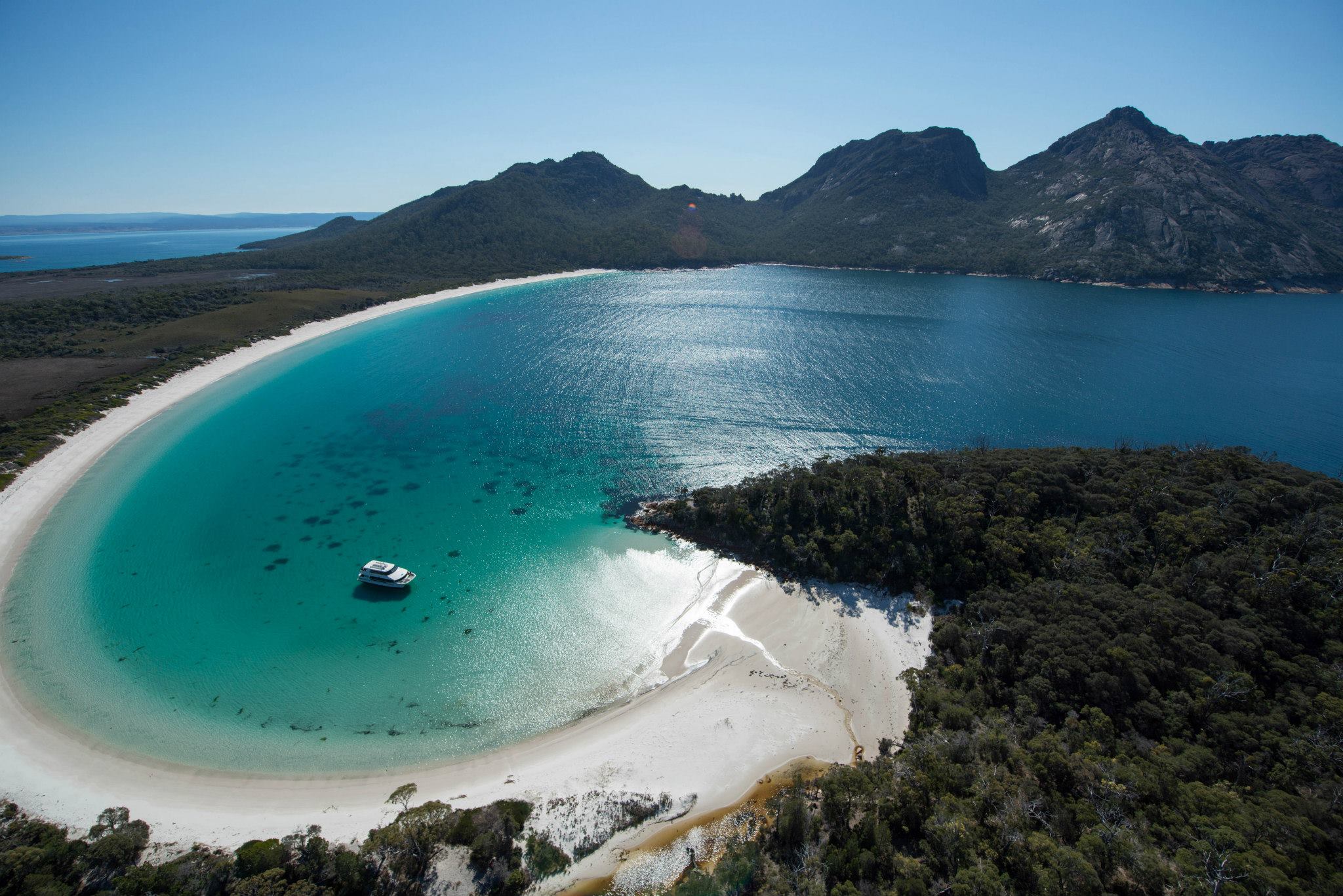
Seen from above, the bay forms a graceful crescent between forested hills and the open sea. Its sand is exceptionally pale, and the water shifts between shades of blue, green, and turquoise depending on the weather, depth, and angle of the sun.
The name “Wineglass Bay” is believed to be connected to the area’s whaling history. Historical accounts suggest that when whaling activity took place in the region, the bay could appear stained red by blood. The name is a reminder that even beautiful places can carry difficult histories.
Today, the bay is valued for entirely different reasons. It is known for its natural splendour, walking tracks, wildlife, and peaceful shoreline. Visitors often reach the famous lookout after a climb through woodland and rocky terrain. The effort is rewarded by the first view of the water below.
The sight is powerful because it arrives suddenly. One moment, the track is surrounded by trees and granite. The next, the landscape opens wide, revealing the bay as though it has been carefully framed by the mountains.
At the beach itself, the experience changes again. The lookout offers grandeur, but the shoreline offers calm. Waves move gently across the sand, seabirds pass overhead, and the granite slopes rise behind the beach. It becomes easy to understand why people return to Freycinet repeatedly, even after seeing its most famous view.
More than one beautiful view
It would be a mistake to visit Freycinet only for Wineglass Bay.
The park contains a remarkable variety of coastal scenery. Honeymoon Bay, near Coles Bay, is a small and sheltered inlet surrounded by granite rocks and clear water. It is particularly beautiful in the early morning, when the surface of the bay reflects the surrounding hills.
Sleepy Bay offers a more rugged experience. Here, the coastline feels exposed and dramatic, with waves breaking against rocks and the ocean stretching toward the horizon. The name suggests stillness, but the landscape can be full of wind and movement.
The Cape Tourville Lighthouse provides another memorable viewpoint. A short, accessible circuit leads through coastal vegetation and along cliffs overlooking the sea. From there, visitors may see rocky islands, distant beaches, seabirds, and, at certain times of year, marine life passing offshore.
The varied character of these locations is part of Freycinet’s appeal. One cove may be sheltered and gentle, while another part of the coastline may feel wild and elemental. Within a relatively compact area, the park offers beaches, mountains, forest, cliffs, wetlands, and open ocean.
A landscape alive with wildlife
Freycinet is not only visually impressive; it is also an important habitat for Australian wildlife.
Visitors may encounter wallabies moving quietly through the vegetation, especially in the early morning or late afternoon. Tasmanian pademelons, possums, echidnas, and wombats also live in the region. The animals are often most active when the park is quieter, before the day’s visitors have arrived or after they have begun to leave.
The coastal waters support seals, dolphins, and a variety of seabirds. Depending on the season and conditions, whales may also be seen moving through the waters of the Tasman Sea.
Birdlife is particularly prominent. The peninsula provides habitat for species adapted to coastal heath, forest, wetland, and rocky shoreline environments. Birds of prey may circle above the mountains, while smaller species move through the shrubs and trees.
Wildlife encounters should always be treated with respect. Animals should not be fed, approached too closely, or disturbed for photographs. A quiet observer usually sees more than someone who rushes through the landscape.
Walking through Freycinet
Walking is one of the best ways to understand the park.
The tracks around Freycinet vary from short, accessible walks to demanding multi-day routes. Some paths lead to viewpoints, while others descend toward beaches, cross forested slopes, or follow the coastline.
The walk to the Wineglass Bay lookout is among the most popular. It requires an uphill climb, but it is manageable for many visitors with reasonable fitness. The track passes through native vegetation and granite terrain before reaching the celebrated viewpoint.
Those who continue down to Wineglass Bay beach experience a more immersive journey. The descent is rewarding, but the return climb requires additional time and energy. As with any outdoor activity, visitors should carry water, wear suitable footwear, and allow enough time to return safely.
The Hazards Beach and Wineglass Bay circuit offers a longer and more varied experience. It combines mountain views, forest, beach scenery, and the opportunity to experience the peninsula away from the busiest viewpoint.
Longer walks require careful preparation. Weather on the Tasmanian coast can change quickly, and strong winds may develop with little warning. A beautiful day can become cold, wet, or difficult in a short period of time.
Walking in Freycinet is not simply a way to reach a destination. It is a gradual introduction to the park’s character. The sounds become clearer: wind through leaves, birds calling from the forest, waves moving below the cliffs. The landscape reveals itself slowly, and the journey becomes as important as the view.
The quiet beauty of Coles Bay
Across from the Freycinet Peninsula lies Coles Bay, a coastal settlement that serves as one of the main gateways to the park.
Coles Bay has a gentler character than the exposed outer coast. The waters are often calm, and the view toward the Hazards is extraordinary. From the shoreline, the mountains rise across the bay in a long, dramatic line.
This is one of the places where Freycinet’s scale can be appreciated. The peaks do not appear distant or abstract. They dominate the horizon, reflected in the water and softened by changing light.
At sunrise, the first light touches the tops of the mountains. At sunset, the Hazards can glow in shades of pink and gold. Between those moments, the peninsula changes constantly as clouds and sunlight move across the landscape.
Coles Bay is also a place where visitors can slow down. After a day of hiking, kayaking, swimming, or exploring, the simple act of sitting beside the water becomes meaningful. The park does not always demand activity. Sometimes its greatest gift is the opportunity to be still.
How tourism changed the park
Freycinet’s beauty has made it one of Tasmania’s most popular national parks. Tourism has brought economic benefits to nearby communities and allowed more people to experience the landscape. It has also created challenges.
Popular viewpoints and walking tracks can become crowded, particularly during holiday periods and in favourable weather. Increased visitation places pressure on paths, vegetation, wildlife, parking areas, and facilities.
The park’s future depends on responsible tourism. Visitors can help by staying on marked tracks, taking rubbish with them, respecting closures, keeping dogs and other domestic animals out of restricted areas, and avoiding damage to plants and rock formations.
Camping should take place only in designated areas, and fires must follow current regulations. Because the region is vulnerable to bushfire, even a small careless act can have serious consequences.
A national park remains beautiful only if it is protected. Photographs and memories are valuable, but they should never come at the expense of the landscape itself.
The importance of conservation
Freycinet’s ecosystems are fragile. Coastal plants grow in harsh conditions, exposed to salt, wind, sun, and limited soil. A damaged area may take years to recover.
The park also exists within a broader environmental system. The ocean, beaches, forests, wetlands, and mountains are connected. Changes in one part of the system can affect another. Erosion, invasive species, climate change, changing fire patterns, and increased visitor numbers all influence the health of the environment.
Conservation is therefore not only about preserving attractive scenery. It is about maintaining the conditions that allow wildlife, plants, waterways, and communities to thrive.
For visitors, conservation can begin with small choices. Travel thoughtfully. Use established paths. Give animals space. Learn about the cultural history of the area. Leave natural objects where they are. Do not assume that a place is durable simply because it looks wild.
The true privilege of visiting Freycinet is not ownership of the view. It is the opportunity to witness it without damaging what makes it special.
When to visit Freycinet National Park
Freycinet can be visited throughout the year, and each season offers a different atmosphere.
Summer generally brings longer daylight hours and warmer conditions, making it popular for swimming, boating, and longer walks. It is also the busiest season, so accommodation and campsites may require advance planning.
Autumn often brings calmer conditions and softer light. The landscape can feel quieter, and the changing colours of the vegetation add another dimension to the scenery.
Winter may be cooler and wetter, but it can also offer striking clarity. On some days, the mountains appear especially sharp against the sky, and the beaches are far less crowded.
Spring brings fresh growth and increased bird activity. Wildflowers may add colour to the coastal landscape, while the combination of sunlight and passing clouds creates dramatic photographic conditions.
The best time to visit depends on what a traveller wants. Those seeking warmth and water activities may prefer summer. Those seeking solitude and atmosphere may find the cooler seasons more rewarding.
What makes Freycinet unforgettable
Freycinet National Park is beautiful because it brings together elements that are rarely found in such harmony.
It has the softness of a beach and the strength of a mountain range. It has quiet bays and exposed coastlines. It has accessible viewpoints and challenging wilderness walks. It feels welcoming from Coles Bay, yet mysterious when viewed from a remote trail.
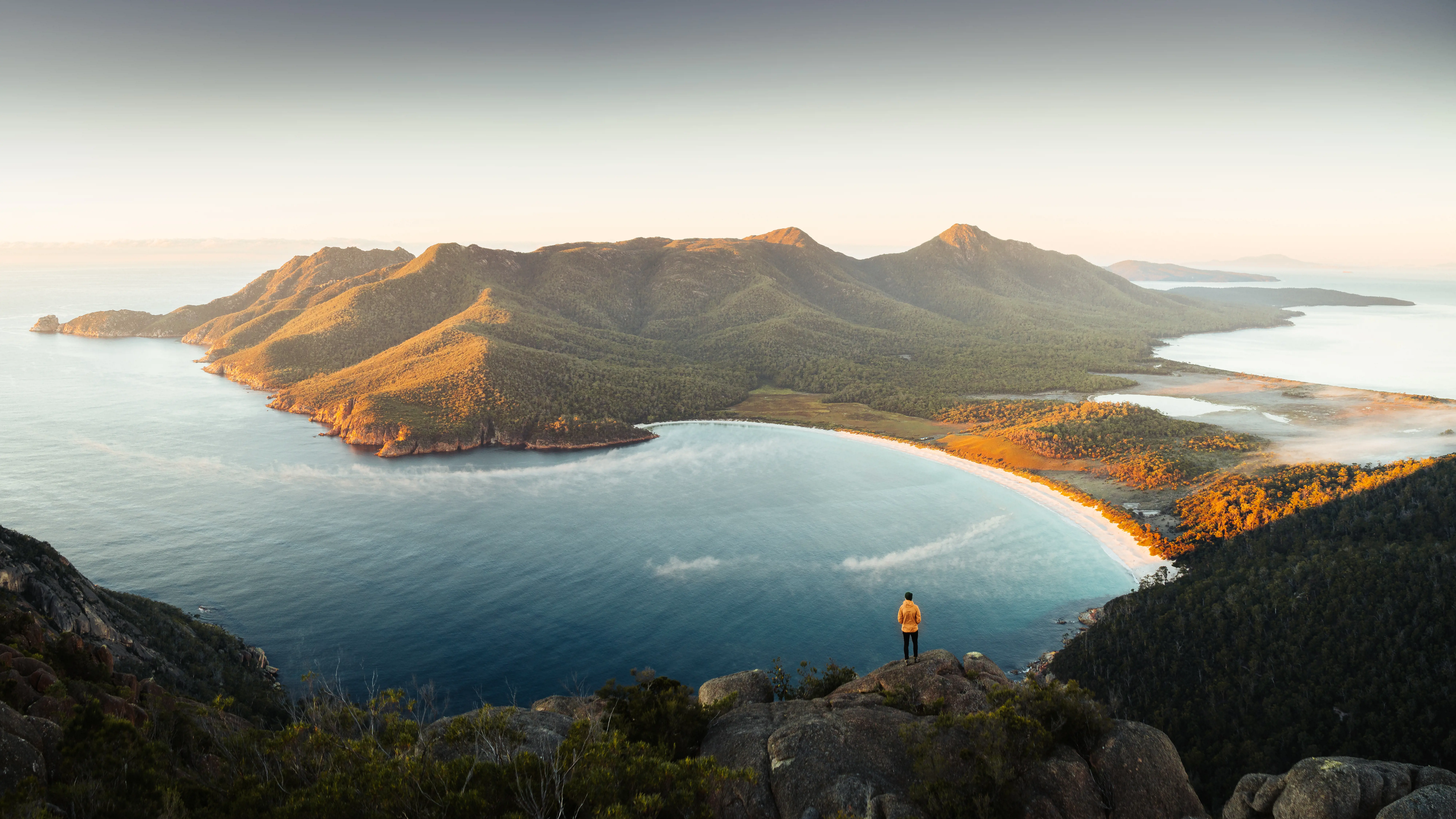
Most of all, Freycinet creates a sense of perspective. Standing above Wineglass Bay, looking across the Hazards, or watching the sea from a granite headland, a visitor becomes aware of time in a way that ordinary life rarely allows.
The mountains were shaped long before modern roads reached the peninsula. The tides will continue moving after today’s visitors are gone. The wind will keep passing over the beaches and through the forests. The landscape is not performing for us; it is simply continuing to exist.
That may be why the experience feels so powerful.
A final reflection
Freycinet National Park is more than a famous Australian destination. It is a place where geology, Aboriginal history, wildlife, conservation, and human wonder meet.
Wineglass Bay may be the image that first attracts people, but the deeper experience lies beyond the photograph: in the climb toward the lookout, the sound of waves at a hidden cove, the sight of granite glowing in evening light, and the understanding that this landscape deserves to be protected for generations yet to come.
Australia has no shortage of remarkable national parks. But Freycinet is exceptional because its beauty is immediately visible and slowly understood. The first view may take your breath away, but the longer you remain, the more the park reveals.
It is a place of colour, silence, movement, history, and immense natural grace—a coastal wilderness that does not need exaggeration to be extraordinary.