


















[et_pb_section fb_built=”1″ theme_builder_area=”post_content” _builder_version=”4.27.7″ _module_preset=”default”][et_pb_row _builder_version=”4.27.7″ _module_preset=”default” theme_builder_area=”post_content”][et_pb_column _builder_version=”4.27.7″ _module_preset=”default” type=”4_4″ theme_builder_area=”post_content”][et_pb_text _builder_version=”4.27.7″ _module_preset=”default” theme_builder_area=”post_content” hover_enabled=”0″ sticky_enabled=”0″]

How An Asteroid Created The Cenotes Of Mexico:
Today they are places of breathtaking beauty.
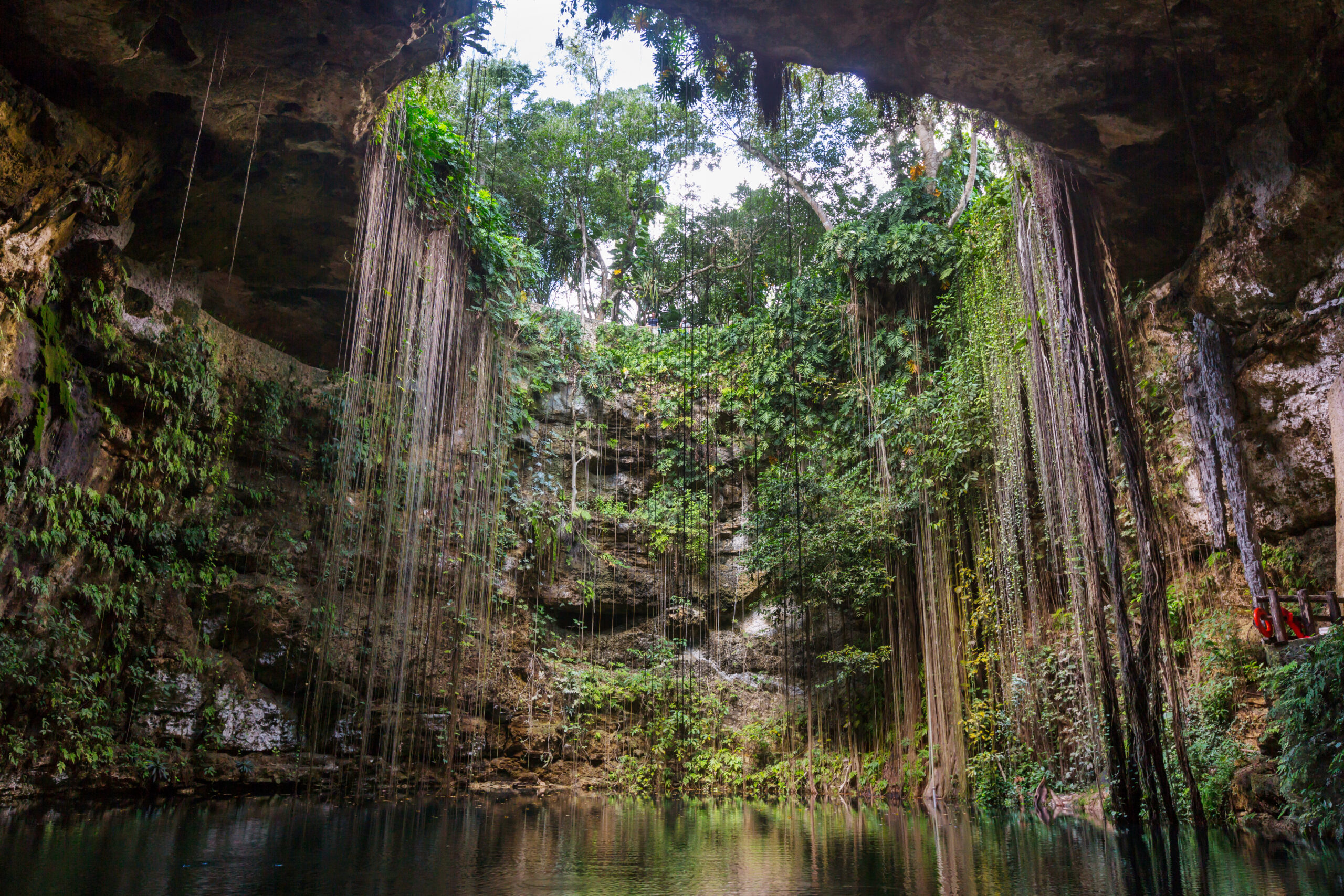
Crystal clear water shimmers beneath shafts of sunlight. Vines hang from limestone cliffs, fish glide silently through impossibly blue pools, and travelers dive into waters that seem untouched by time. The cenotes of Mexico have become symbols of peace, adventure, and natural wonder.
But beneath that tranquil surface lies the scar of the most violent day in Earth’s history.
Travel back 66 million years.
The world was alive with giants. Dinosaurs ruled every continent, forests stretched across the globe, and life appeared unstoppable. Then, without warning, a mountain sized asteroid, estimated to be about 10 to 15 kilometers wide, hurtled toward Earth at a speed of roughly 70,000 kilometers per hour.
It’s destination would forever change the planet.
The asteroid slammed into what is now the Yucatan Peninsula in Mexico with unimaginable force. The impact excavated a crater nearly 180 kilometers across, now known as the Chicxulub Crater. The explosion released more energy than billions of atomic bombs combined, vaporizing rock, igniting wildfires, and sending molten debris high into the atmosphere.
The shockwave raced across continents.
Massive earthquakes shook the Earth. Tsunamis hundreds of meters high surged across ancient coastlines. As debris fell back through the atmosphere, the sky glowed with intense heat, igniting forests thousands of kilometers from the impact.
Then came the darkness.
Dust, ash, and sulpher filled the atmosphere, blocking much of the sun’s light. Temperatures plunged. Plants died, and food chains collapsed.
Around 75 percent of all species on Earth, including every non-avian dinosaur disappeared in the greatest mass extinction in our planet’s history.
Yet the story doesn’t end there.
Over millions of years, rainwater slowly seeped into the fractured limestone surrounding the buried crater. Limestone dissolves easily in slightly acidic groundwater, gradually carving out vast underground rivers, tunnels, and caverns beneath the Yucatan.
Eventually the ceilings of some of these underground chambers collapsed.
What remained were deep, water filled sinkholes known as Cenotes.
Many of the cenotes form a remarkable circular pattern around the buried Chicxulub impact crater. Scientists believe the enormous impact fractured the underlying rock, creating pathways that later guided groundwater and influenced where many of these cenotes would eventually form.
In a remarkable twist of history, a catastrophe that once brought about the end of the Age of Dinosaurs helped shape one of the world’s most beautiful natural landcapes.
Long before modern visitors arrived, the Maya people considered cenotes sacred. They believed these deep pools were gateways to the underworld, known as Xibalba. Some cenotes served as vital freshwater sources. while others became places of ceremony, where offerings of jade, pottery, gold, and other valuables were left beneath the water. Archaeologists have also discovered human remains in several ceremonial cenotes, revealing their profound spiritual importance.
Today, millions of people swim, snorkel, and dive into these ancient pools without realizing they are floating above the geological aftermath of a global catastrophe, where a hidden world of submerged caves, winding tunnels, delicate rock formations, and ancient chambers that have taken countless millenia to develop, exist.
The water is astonishingly clear because it is naturally filtered through layers of limestone.
The cenotes are more than beautiful swimming holes, they are living reminders that even the most catastrophic moments in Earth’s history can, given enough time, become places of extraordinary beauty.
Sometimes the greatest wonders of our world begin with its darkest days.
[/et_pb_text][/et_pb_column][/et_pb_row][/et_pb_section]