


















[et_pb_section fb_built=”1″ theme_builder_area=”post_content” _builder_version=”4.27.7″ _module_preset=”default”][et_pb_row _builder_version=”4.27.7″ _module_preset=”default” theme_builder_area=”post_content”][et_pb_column _builder_version=”4.27.7″ _module_preset=”default” type=”4_4″ theme_builder_area=”post_content”][et_pb_text _builder_version=”4.27.7″ _module_preset=”default” theme_builder_area=”post_content” hover_enabled=”0″ sticky_enabled=”0″]

The crowd is already screaming before the gates open:
More than fifty thousand voices crash together like thunder beneath the towering stone walls of the Colosseum. The air is thick with dust, sweat, and anticipation. Somewhere above, nobles lean over marble railings. Merchants shout. Children strain to see the arena below. The Emperor watches from his seat.
Then, the iron gates creak open.
A man steps into the sunlight.
He is not a hero.
He is a gladiator.
History often remembers gladiators as fearless warriors-legends who fought with unmatched courage and skill.
Movies portray them as champions destined for glory. But behind the spectable was a life defined by pain, fear, and survival.
For most gladiators, every sunrise carried one haunting question:
Would today be their last?
Many gladiators were prisoners of war, convicted criminals, or enslaved people forced into combat. Others volunteered, driven by crushing debt or the hope of earning fame and fortune.
Whatever their path, once they entered a gladiator school, their old lives were gone.
They belonged to someone else.
Their new home was the ludus, a gladiator training school, life there was relentless.
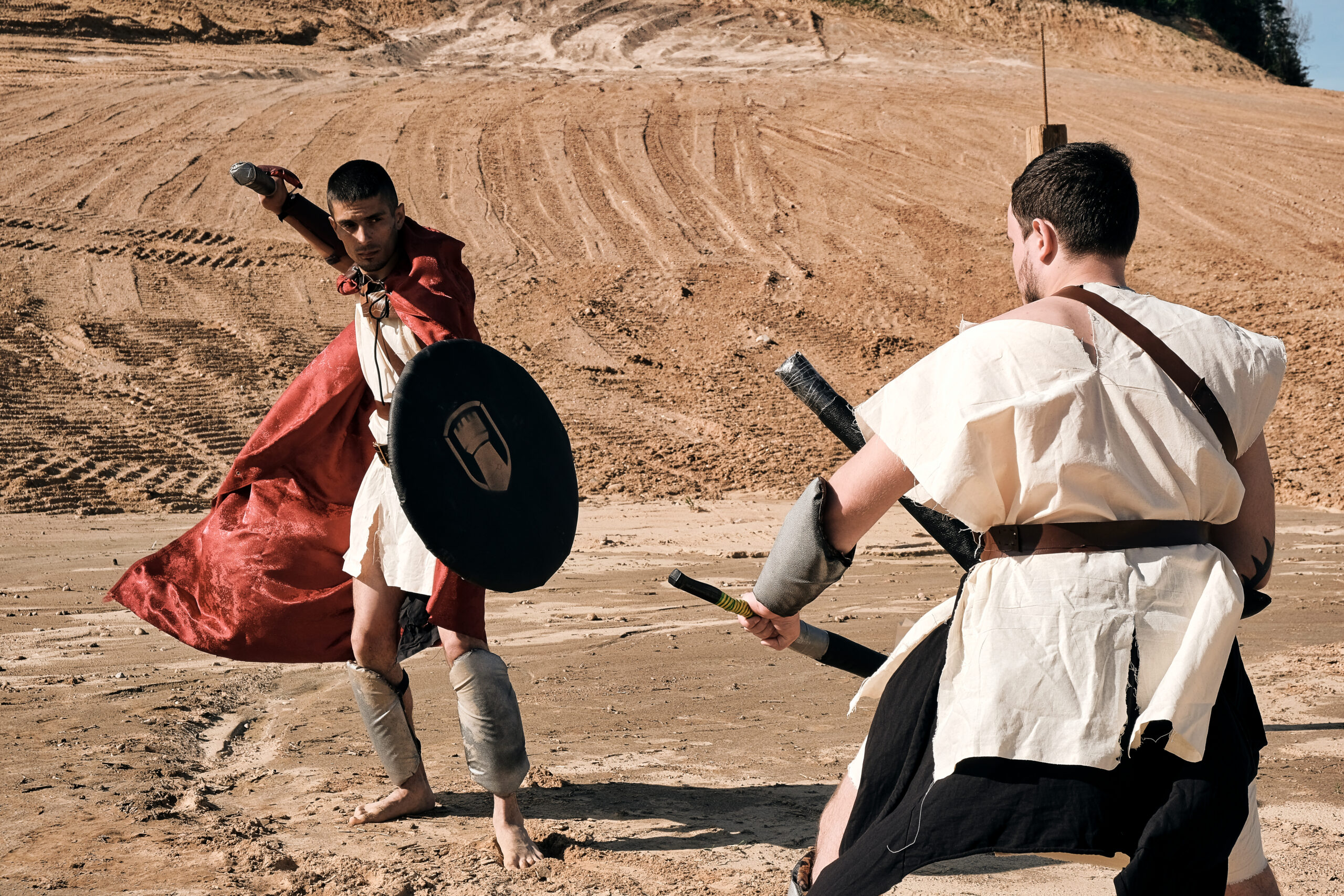
Before dawn, training began. wooden swords struck practice posts thousands of times each day. Heavy shields weighed down exhausted arms.
Instructors, many of them former gladiators, showed little mercy. Every mistake earned punishment. Every weakness was corrected with brutal discipline.
The goal was simple.
Create a fighter capable of entertaining Rome.
The irony is that gladiators were valuable investments. Owners spent enormous sums training them, feeding them, and providing medical care. A dead gladiator earned no future profits.
So while they lived under harsh conditions, they were often treated more like prized racehorces than disposable soldiers.
Their diet might surprise you.
Archaeological evidence suggests many gladiators ate mostly barley, beans, and legumes, earning them the nickname “barley men.” The carbohydrate rich meals helped build a protective layer of body fat.
Why?
Because cuts looked more dramatic to the crowd without immediately becoming fatal.
Even their bodies were shaped for entertainment.
Then came fight day.
The tunnels beneath the arena were dark and cold.
Above them, tens of thousnads waited.
Many gladiators described hearing the roar of the crowd long before stepping into the light. Every cheer echoed through the stone corridors like distant thunder.
Some whispered prayers. Some stood silently.
Some undoubtedly wondered if they would ever see another sunset.
Then the gate opened.
Contrary to popular belief, not every gladitorial match ended in death.
Training a skilled fighter required years and enormous expense. Referees supervised contests, and many bouts ended when one fighter surrendered or could no longer continue. Whether a defeated gladiator lived often depended on the organizer or the games, the crowd’s reaction, and the circumstances of the fight.
Still, death was never far away. Broken bones. Deep wounds. Massive blood loss. Infection.
One mistake could erase years of training in seconds.
The psychological burden may have been even worse than the physical pain.
Imagine living every day knowing your profession demanded that you stand face to face with another armed human being before thousands of cheering spectators.
Imagine hearing the crowd celebrate your survival one week…
…and cheer just as loudly when someone else died the next.
That was everyday life for most gladiators.
[/et_pb_text][/et_pb_column][/et_pb_row][/et_pb_section]