

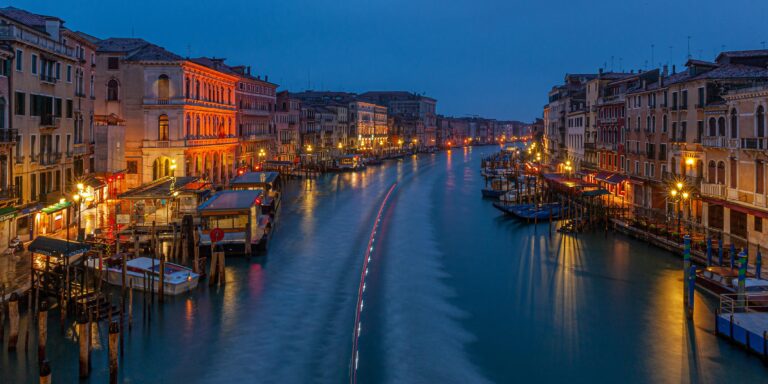



THE GRAND CANAL, VENICE
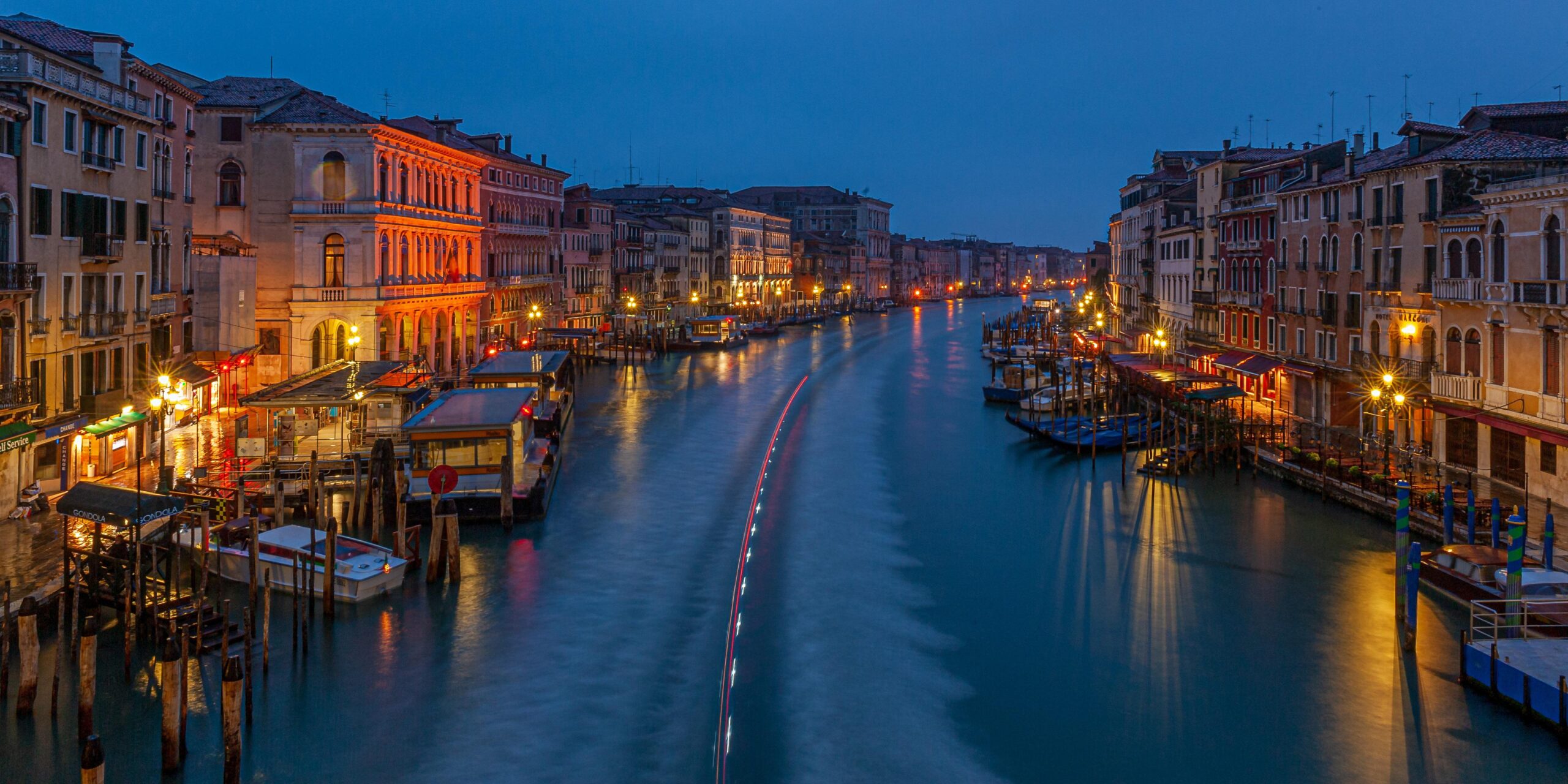
If you ever been to Venice, Italy then chances are that you have visited the winding waterway that has served as the city’s main avenue for centuries. It is lined with elegant palaces, churches, and historic buildings. The canal tells the story of a maritime republic that once connected Europe with distant parts of the World.
The foundations of the city developed on islands within the Venetian Lagoon, where generations of builders learned to create structures in an extraordinary difficult environment. Wooden piles were driven into the soft ground beneath the water, creating foundations capable of supporting buildings above.
The Grand Canal cuts through the city in a sweeping S-shaped path, separating Venice into two sides and connecting its historic neighbourhoods.
By day, boats, water taxis, and gondolas glide across its waters in a scene unlike any other city on Earth. By night, the reflections of lights dancing on the canal create an atmosphere that feels timeless and almost dreamlike.
When you are standing along the Grand Canal, it is easy to understand why Venice has inspired so many artists, writers, and travelers for generations. Here, the water is not just part of the landscape, it is the lifeblood of the city, carrying its history, its culture, and enduring beauty through every curve of the canal.
But the beauty of Venice comes with a price. The city has always lived alongside the water and sometimes fought against it.
High tides can flood parts of Venice in an event known as acqua alta, meaning “high water.” The phenomenon is part of life in the lagoon, although particularly severe flooding can threaten buildings, businesses, and historic sites.
So next time you visit this beautiful place, you can appreciate it a little more knowing some of its history.