


















[et_pb_section fb_built=”1″ theme_builder_area=”post_content” _builder_version=”4.27.7″ _module_preset=”default”][et_pb_row _builder_version=”4.27.7″ _module_preset=”default” theme_builder_area=”post_content”][et_pb_column _builder_version=”4.27.7″ _module_preset=”default” type=”4_4″ theme_builder_area=”post_content”][et_pb_text _builder_version=”4.27.7″ _module_preset=”default” theme_builder_area=”post_content” hover_enabled=”0″ sticky_enabled=”0″]

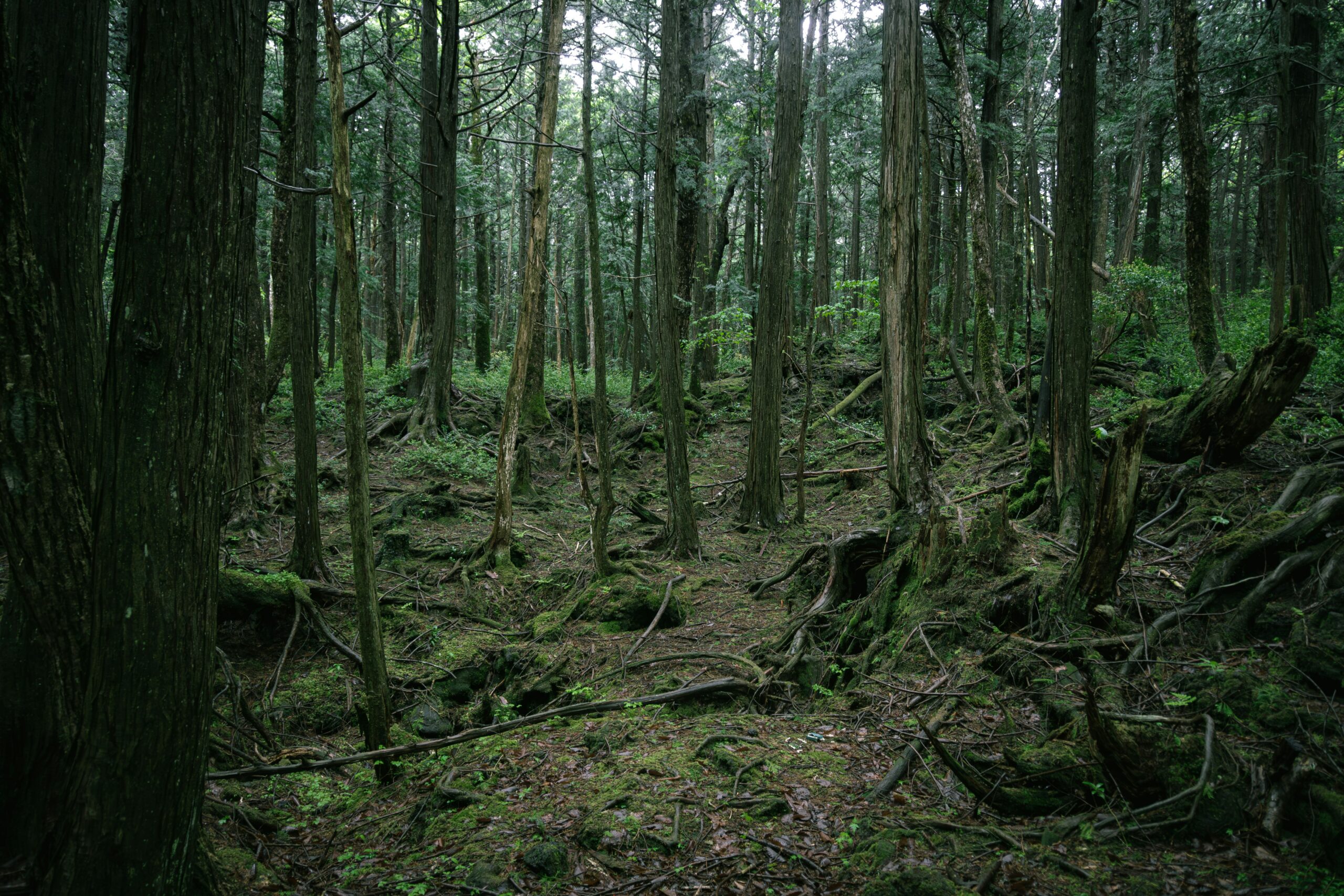
Nestled at the base of the iconic Mount Fuji in Japan lies Aokigahara, a lush and eerily serene forest that has captured the imagination of thrill seekers and adventurers alike. Known as the “Sea of Trees,” this sprawling expanse has a beauty that belies its grim reputation.
It’s here that the balance between tranquility and tragedy is strikingly evident, making Aokigahara one of the most haunted (and unsettling) places on Earth.
Aokigahara is rich with folklore. Historically, it has been associated with the practice of ubasute, wherein an elder relative would be abandoned to die in the woods during times of famine.
This dark history seeps into the forest’s dense trees, creating an environment thick with the whispers of the past. Local legends suggest that the spirits of those abandoned still roam, giving the forest an almost palpable energy.
As you step into Aokigahara, you can feel a slight chill in the air, a remnant of the somber histories interwoven with the landscape. The forest is eerily quiet, with an uncanny stillness that envelops everything. The only sounds are the rustling leaves and the distant call of birds, both of which seem to echo the sorrow of those lost.
Despite its breathtaking beauty, Aokigahara has garnered international notoriety as a site of suicide. The number of lives lost to despair in these woods is staggering, with hundreds reported each year. This somber reality has attracted the attention of not just local authorities but also filmmakers, authors, and explorers drawn to its haunting allure.
In 2010, the forest hit the headlines when the controversial YouTuber Logan Paul filmed a video there, leading to a global outcry and spotlighting the sensitive issues surrounding mental health. Despite the negative attention, Aokigahara remains a tragic pilgrimage for some, a place to seek solace or an end to suffering.
As you wander the paths of Aokigahara, you might encounter the stark reminders of those who have walked before you. Signs posted by the Japanese government urge visitors to reconsider their intent and offer hotlines for those in need of help. Symbolizing a desperate plea for life amidst despair, these signs clutter the landscape, a haunting juxtaposition to the serene beauty surrounding them.
Park rangers often find abandoned belongings scattered within the forest, remnants of lives interrupted. These items serve as a chilling reminder of the heartbreak that continues to ripple through this remarkable yet unforgiving place.
For the curious traveler, Aokigahara can still be a safe haven for exploration. The forest is home to a myriad of hiking trails and unique geological formations, including stunning lava caves shaped by the last eruption of Mount Fuji in the 18th century. Adventurers can experience the beauty of ancient trees, rare wildlife, and even breathtaking views of Fuji itself.
However, it’s imperative to approach Aokigahara with respect and mindfulness. If you plan to explore, consider going with a guide, sticking to designated paths, and remaining vigilant about your surroundings.
Aokigahara is a place where beauty and sorrow intertwine a forest that cradles the spirits of the past while beckoning the curious traveler. It serves as a poignant reminder of life’s fragility and the importance of mental health awareness. Whether you view it as a destination for adventure or a place of reflection, Aokigahara is undeniably one of the most intriguing and unsettling locations on our planet.
Remember, if you or anyone you know is struggling with mental health issues, it’s essential to reach out for help. There’s always a light to be found, even in the darkest of times.
[/et_pb_text][/et_pb_column][/et_pb_row][/et_pb_section]